1

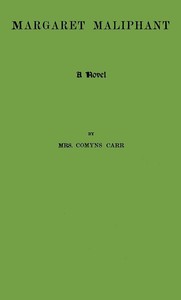
Margaret Maliphant — A Reader’s Guide
(0 User reviews)
2829
Project Gutenberg
2020
Not confirmed
Young women -- Fiction; Sisters -- Fiction; Mate selection -- Fiction; England -- Social life and customs -- Fiction; Sussex (England) -- Fiction
Readers of public-domain and historical texts
Project Gutenberg digital edition
en
Edition facts
Words
162,503
Reading time
707 min
Text sections
43
Margaret Maliphant — A Reader’s Guide can be approached with a clearer sense of reading commitment from its source measurements: 162,503 words, 11 hr 47 min estimated reading time, and 43 detected text sections.
The text analysis averages about 17.4 words per sentence, while the detected sections provide another way to judge how the source is divided.
Project Gutenberg metadata also associates the work with “Young women -- Fiction,” connecting these edition facts with the source record’s subject description.
Source:
Project Gutenberg record #63202
A first-person narrative set in Sussex marshland, following Margaret Maliphant's recollections of her youth, her bond with her sister Joyce, and the tensions of rural courtship. The prose shifts between lyrical landscape description and restrained emotional revelation.
Read the complete public-domain text at its original source.
Read on Project GutenbergThe novel opens with a prologue that establishes a distinctive sensory geography: twilight on the marsh, the sound of the sea, a solitary homestead, and a tall dark figure disappearing onto the plain. This landscape is not mere backdrop but a mnemonic device—the narrator states that the past lies stretched before her 'vivid, yet distant as a dream.' The voice is retrospective, intimate, and unhurried, drawing the reader into a memory that is both personal and tied to a specific place.
From the first chapter, the narrative voice is that of Margaret Maliphant, speaking in the first person. She describes herself as barely nineteen, the younger daughter of Farmer Maliphant of Knellestone Grange. The prose is measured, with long sentences that mimic the rhythms of recollection. The opening chapters establish a world of family history, local legend, and the quiet routines of rural Sussex life.
A Voice Rooted in Place and Memory
The narrative voice in Margaret Maliphant is distinctive for its grounding in the Sussex landscape. The prologue uses the marsh, the mill, and the sea as anchors for memory, and this pattern continues throughout the excerpts. When Margaret describes her night on the marsh, she notes the 'familiar solid curves of the fortress upon the marsh' taking shape out of the fog. The setting is not merely described but felt—the chill breeze, the dew-drops on her red hair, the sound of the sea 'sweetly lulling.'
The first-person narration allows for a layered sense of time. Margaret often comments on her past self with a mixture of irony and tenderness. For instance, she marvels at her own boldness in saying 'I regret nothing' to a companion, adding parenthetically 'as I write it down now I marvel how I could have said it.' This double perspective—the younger self acting, the older self reflecting—gives the prose a quiet tension.
The language is formal but not stiff, with a preference for compound sentences and a measured pace. The narrator uses words like 'ague' and 'bailiff,' anchoring the story in a specific historical and social milieu. The voice is that of a woman looking back, and the reader is invited to share her vantage point.
Shifts in Pace: From Stillness to Urgency
The novel's pacing is notably variable, and the excerpts reveal a deliberate alternation between static description and sudden movement. The prologue is almost entirely still—a single moment of looking, listening, and remembering. The sentences are long, with clauses that accumulate like layers of sediment. In contrast, Chapter XXIII introduces a quickened tempo: Margaret returns home at dawn, her habit wet, her face pale. The prose becomes more clipped, with shorter sentences and a focus on physical details: 'I stood there in the cool, gray dawn, with my wet habit, the dew-drops still standing on the curls of my red hair.'
This acceleration is often linked to emotional intensity. When Margaret realizes she has not thought of her sister Joyce's return, the narrative shifts into a series of short, self-interrogating questions: 'How was it that I had not thought of it? How was it that I had not thought of it all yesterday, nor for many yesterdays before it?' The rhythm mimics her internal alarm.
Another notable shift occurs in the dialogue. Early exchanges are measured, with characters speaking in complete, polite sentences. Later, as tensions rise, the dialogue becomes more fragmented. The companion's silence—'he did not reply'—creates a pause that contrasts with Margaret's effusive speech, heightening the sense of unspoken conflict.
Recurring Details and Their Narrative Weight
Certain details recur across the excerpts, functioning as motifs that tie the narrative together. The marsh is the most prominent: it appears in the prologue as a 'level of dim monotony,' in Chapter I as a place of danger (Margaret might have 'got my death of ague'), and again in Chapter XXIII as a site of transformation. The sound of the sea is another repeated element, described as 'sweetly lulling' and 'tenderly murmuring,' linking the present to childhood.
Margaret's red hair and gray eyes are mentioned twice, suggesting that her appearance is a marker of identity. The color red—her hair, the dawn light—contrasts with the gray of the marsh and the fog, creating a visual pattern of warmth against cold.
The sister Joyce is introduced as a figure of importance, but Margaret's failure to think of her during the night's adventure hints at a growing distance. The phrase 'it was the day for Joyce to come home' is repeated, as if Margaret is trying to convince herself of its significance. These small repetitions accumulate, giving the narrative a texture of obsession and regret.
Readers should attend to the way Carr uses the first-person voice to create a sense of immediacy and distance simultaneously. The narrator's retrospective stance means that every event is filtered through memory, and the reader must weigh what is said against what is withheld. The landscape is not decoration but a character in its own right, shaping the story's mood and meaning. Pay attention to the gaps—the silences in dialogue, the things left unsaid—for they often carry the greatest weight.
That grey afternoon in Sussex, with Margaret and Joyce drifting through the marsh mist, I kept thinking how grief hides inside ordinary gestures. Afterwards, restless, I picked up another guide almost without choosing it—something about dogs, about loyalty, about the quiet ways creatures hold our secrets. The same restraint, the same unspoken ache. Dogs Always Know — Themes and Context sat beside my teacup for hours, and I never once looked at the rain.
There are no reviews for this eBook.
There are no comments for this eBook.
Reader reflection
Before you leave, reflect on the book
Use these questions to collect your thoughts before moving on.
Your progress
0
/
10
2
Did this book hold your interest?
3
Would you encourage someone else to read it?
4
How easy was the book to follow?
5
Was the book moving at the right speed?
6
How useful did the reading feel?
7
Which element worked best for you?
8
How strong was your personal connection to the text?
9
In one sentence, what did you learn?
10