1

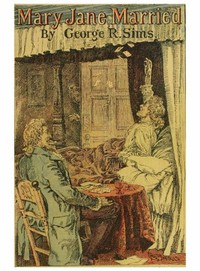
Mary Jane Married: Tales of a Village Inn — Edition Insights
(0 User reviews)
2674
Project Gutenberg
2019
Not confirmed
England -- Social life and customs -- 19th century -- Fiction; English fiction -- 19th century; Husband and wife -- Fiction; Hotelkeepers -- Fiction
Readers of public-domain and historical texts
Project Gutenberg digital edition
en
Edition facts
Words
121,447
Reading time
529 min
Text sections
11
Before opening Mary Jane Married: Tales of a Village Inn — Edition Insights, the edition data offers a quick orientation: 121,447 words, 8 hr 49 min estimated reading time, and 11 detected text sections.
The text analysis averages about 21.6 words per sentence, while the detected sections provide another way to judge how the source is divided.
Project Gutenberg metadata also associates the work with “England -- Social life and customs -- 19th century -- Fiction,” connecting these edition facts with the source record’s subject description.
Source:
Project Gutenberg record #60899
Mary Jane, now married and running the Stretford Arms inn, struggles to write her memoirs amid interruptions from her husband Harry, a baby, and inn duties. This sequel to Mary Jane's Memoirs blends domestic comedy with the challenges of authorship, as she recounts village tales and her own frustrations with a spouse who sees writing as a waste of time.
Read the complete public-domain text at its original source.
Read on Project GutenbergMary Jane, the former housemaid who charmed readers in Mary Jane’s Memoirs, is now married and managing the Stretford Arms inn. In this sequel, she attempts to continue her life story but finds authorship far harder than before. Her husband Harry, though affectionate, shows little respect for literature, once asking why she cannot write a book and make out a bill simultaneously. The narrative voice remains colloquial and self-deprecating, as Mary Jane describes losing pages to the fire, struggling to find quiet moments, and feeling that her ideas get “all mixed up” when Harry talks. The excerpts reveal a tension between domestic duty and creative ambition, with the inn’s daily chaos constantly interrupting her pen.
The Author’s Domestic Interruptions
Mary Jane’s writing process is repeatedly thwarted by the demands of running an inn and caring for her family. She notes that she never gets a “real quiet hour,” as there is always something to attend to—a customer, the baby, or Harry. Her husband’s presence is particularly disruptive: if he is in the room, she cannot concentrate, expecting him to speak at any moment. Once, the housemaid used her written notes to light the fire, and Mary Jane could not recall what they contained for weeks. These episodes highlight a recurring pattern: the physical and mental space for authorship is constantly invaded by the practicalities of innkeeping and marriage. The contrast between her ideal of a writer’s study—with dictionaries, maps, and silence—and her reality of a bustling household is sharp and humorous.
Harry’s Skepticism and the Value of Writing
Harry’s attitude toward Mary Jane’s writing is a source of friction. He remarks that if she does not finish the book soon, “that book will finish us,” implying that her literary efforts are a threat to their livelihood. Mary Jane interprets this as a lack of respect for “pens and ink,” and she laments that Harry has “no respect for literature.” Yet his comments also reflect a practical concern: the inn requires constant attention, and her writing takes time away from that work. The tension between art and commerce is embodied in their marriage. Mary Jane’s frustration is palpable when she recalls asking if he thinks she can write with one hand while talking to a customer, and he replies, “Why not?” This exchange encapsulates the core conflict: a husband who cannot fathom the difficulty of writing, and a wife who must defend her creative labor against the demands of daily life.
Village Life and the Inn as a Stage
Though the excerpts focus on Mary Jane’s writing struggles, they also hint at the broader setting of the Stretford Arms inn. She mentions taking down notes about Tom Dexter, the odd man, whose story she began to tell before being interrupted. The inn is a place where characters come and go, providing material for her tales. The catalog subjects—English social life and customs, husband and wife relations, hotelkeepers—suggest that the inn serves as a microcosm of village society. Mary Jane’s role as landlady places her at the center of this world, observing and recording. However, the excerpts do not reveal the full plot; they only show her attempting to capture these stories while managing the inn’s chaos. The reader is left to infer that the “tales of a village inn” are the very stories she struggles to write down, making her meta-narrative a framing device for the book’s content.
Readers approaching Mary Jane Married should expect a narrative that is as much about the difficulty of telling a story as it is about the story itself. Mary Jane’s voice—frank, harried, and wry—carries the book, and her complaints about interruptions are not merely comic but structural, shaping how the tales unfold. The inn provides a revolving door of characters, but the central relationship is between Mary Jane and her husband, whose differing views on work and art drive much of the tension. This is a domestic comedy with a self-aware narrator, one who knows that her life as a landlady and wife is the very thing that both supplies and obstructs her writing.
That afternoon, rain drummed the inn’s windows while Mary Jane’s fretful baby napped, her husband’s snoring a soft counterpoint. Her scribbled memoirs stalled, as always, on Harry’s indifference. I set it down, pondering how we’re all shaped by haphazard lessons, and later picked up Joan and Peter: The story of an education — Edition Insights, finding there another kind of interrupted growing.
There are no reviews for this eBook.
There are no comments for this eBook.
Reader reflection
What did you think of this book?
Answer a few questions and save a private reflection on this device.
Your progress
0
/
10
2
How did the book work for you overall?
3
Would you pass this book on to a friend?
4
Did the language feel accessible?
5
How strong was your personal connection to the text?
6
How would you describe its reading pace?
7
How original did the book feel?
8
Do you expect to return to this book?
9
Which lesson or insight stayed with you?
10