1

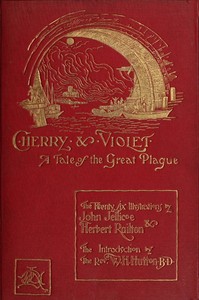
Cherry & Violet: A Tale of the Great Plague — A Reader’s Guide
(0 User reviews)
594
Project Gutenberg
2020
Not confirmed
Historical fiction; Young women -- Fiction; Great Britain -- History -- Restoration, 1660-1688 -- Fiction; Great Plague, London, England, 1664-1666 -- Fiction
Readers of public-domain and historical texts
Project Gutenberg digital edition
en
Edition facts
Words
47,632
Reading time
208 min
Text sections
20
Before opening Cherry & Violet: A Tale of the Great Plague — A Reader’s Guide, the edition data offers a quick orientation: 47,632 words, 3 hr 28 min estimated reading time, and 20 detected text sections.
The text analysis averages about 22.7 words per sentence, while the detected sections provide another way to judge how the source is divided.
Project Gutenberg metadata also associates the work with “Historical fiction,” connecting these edition facts with the source record’s subject description.
Source:
Project Gutenberg record #61080
Anne Manning's 1897 novel uses a first-person narrator, Cherry, to recount the Great Plague of London through domestic details, colloquial dialogue, and a restrained, observational voice. The excerpts reveal a focus on character reactions—such as Kitty's selfless nursing of a plague-stricken infant—and a narrative style that blends period diction with emotional restraint.
Read the complete public-domain text at its original source.
Read on Project GutenbergAnne Manning's Cherry & Violet: A Tale of the Great Plague opens with a first-person narrator, Cherry, whose voice is marked by a deliberate, almost antiquated syntax—capitalized nouns like “Fire,” “Double Tide,” and “Mal-conversation” in the chapter titles signal a self-conscious historical register. The excerpts show Manning favoring domestic scenes over panoramic description: the crisis of a wet nurse accused of starving a child unfolds not in a plague hospital but in a home, with dialogue that crackles with colloquial energy (“Marry come up!”). The authorial choice to filter the plague through Cherry’s limited, observant perspective creates a tension between the enormity of the event and the small, intimate scale of the telling.
Diction and the Period Voice
Manning’s prose leans into a stylized seventeenth-century idiom, but she applies it unevenly. The narrator Cherry uses capitalized common nouns—“Heaviness,” “Spirits,” “Stoutness of Heart”—that evoke older printed texts, yet the dialogue often slips into a more natural, less formal rhythm. When Kitty exclaims, “why, you’ve starved it for the Sake of your own Baby!” the sentence structure is direct and emotional, not archaic. This inconsistency may be deliberate: Manning reserves heightened diction for Cherry’s reflective passages, while letting characters speak in a voice that feels contemporary to her own Victorian readers. The effect is a layered authenticity—the past is signaled but not mimicked slavishly.
Dialogue as Moral Theater
The excerpt from Chapter VIII stages a moral confrontation almost entirely through speech. The wet nurse’s defensive “Marry come up!” and Kitty’s fiery retort create a miniature drama of class and maternal ethics. Manning does not narrate the nurse’s shame; instead, the text notes that “Something in Kitty’s Eye and in her own Heart suddenly abashed her.” The dialogue carries the weight of the scene, with Kitty’s lines—such as “I cannot let this little Thing perish”—serving as both character revelation and plot pivot. Hugh’s minimal response, “God be your Blessing, Kitty!” is all the more powerful for its brevity, showing Manning’s trust in understatement over explanation.
Description Through Restraint
Manning avoids graphic depictions of plague symptoms. When Kitty fears her baby has the disease, the text reports only that she “eagerly” seeks “some Token of the Disease” and finds none. The physical horror is displaced onto the starving infant’s description—“a downright Skeleton”—and onto gestures: Kitty “showered on it Kisses and Tears.” Cherry’s own response to the foster child is described through tactile sensation (“the little Mites of Hands straying over my Face”), not through medical detail. This restraint keeps the focus on emotional and moral responses rather than on the spectacle of suffering, a choice that aligns with the novel’s domestic, character-driven approach to historical catastrophe.
Structure and the Unseen Catastrophe
The chapter titles in the table of contents trace a movement from ordinary life (“Chelsea Buns,” “A Water-party”) to encroaching dread (“A Shadow on the House,” “Signs in the Air,” “The Plague”). Manning builds the plague’s presence gradually, through indirect signs: Cherry’s father feels “a Heaviness on his Spirits” that he cannot explain. The narrative withholds the full scope of the disaster, showing only what Cherry sees—a pattern that continues in the excerpt where the plague is announced not by a death cart but by a woman bringing a sick infant to the door. This structural choice mirrors the limited knowledge of historical individuals, who experienced the plague through rumor, domestic disruption, and sudden absence rather than through omniscient overview.
Readers attentive to Manning’s authorial choices will notice how she uses Cherry’s limited perspective to create suspense and moral complexity. The novel does not offer a panoramic view of the plague but a series of closely observed domestic scenes, where the weight of the historical event is carried by small gestures and restrained dialogue. Pay attention to the moments when Manning lets silence or a single line of dialogue stand in for lengthy explanation—these are the points where her craft is most evident.
I found myself thinking how Cherry’s quiet steadiness—recording Kitty’s nursing without fuss—mirrors the gentle way Ronald and I; or, Studies from Life — Text and Context observes small human moments. Both favor the unhurried glance over the grand gesture, letting character speak through simple doings. That restraint feels almost like a friend’s whisper, not a lecture.
There are no reviews for this eBook.
There are no comments for this eBook.
Reader reflection
Take a moment to reflect on this book
Create a short personal record of your experience with this book.
Your progress
0
/
10
2
Did this book hold your interest?
3
Would you encourage someone else to read it?
4
Did the language feel accessible?
5
Did any part of the book stay with you emotionally?
6
Which part made the strongest impression?
7
Did the story or argument move comfortably?
8
Did the book give you something worth debating?
9
What did this book teach you most?
10