1

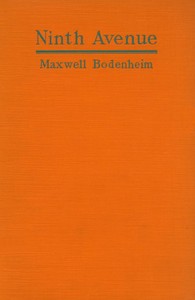
Ninth Avenue — A Closer Reading
(0 User reviews)
725
Project Gutenberg
2022
Not confirmed
Young women -- Fiction; Poor families -- Fiction; Mate selection -- Fiction; Man-woman relationships -- Fiction; Race relations -- Fiction; New York (N.Y.) -- Social life and customs -- 20th century -- Fiction
Readers of public-domain and historical texts
Project Gutenberg digital edition
en
Edition facts
Words
74,571
Reading time
325 min
Text sections
9
For Ninth Avenue — A Closer Reading, the stored edition analysis reports 74,571 words, 5 hr 25 min estimated reading time, and 9 detected text sections.
The text analysis averages about 19.6 words per sentence, while the detected sections provide another way to judge how the source is divided.
Project Gutenberg metadata also associates the work with “Young women -- Fiction,” connecting these edition facts with the source record’s subject description.
Source:
Project Gutenberg record #67372
Maxwell Bodenheim's 1926 novel follows Blanche Palmer, a young woman on Ninth Avenue, navigating poverty, relationships, and race relations in 1920s New York. The narrative voice blends hard-boiled observation with lyrical description, shifting between detached urban portraiture and intimate psychological detail.
Read the complete public-domain text at its original source.
Read on Project GutenbergMaxwell Bodenheim opens Ninth Avenue with a description of Sunday morning light that “seems to borrow” the hardness of buildings and pavements, establishing a narrative voice that oscillates between detached observation and intimate scrutiny. The prose lingers on the street’s “silent inertia” before zooming into Blanche Palmer’s apartment, where her body is described with clinical precision—her “semiplump arms,” “abruptly rounded shoulders,” and “moderately swelling bosom” are set against a room of “half drab and half gaudy arrangements.” This juxtaposition of the general and the particular, the urban and the personal, defines the novel’s rhythmic shifts in pace.
Hard Surfaces and Soft Bodies
Bodenheim’s prose often moves from broad, almost architectural tableaux to close-up physical details. The opening paragraph personifies the city’s light as borrowing “hardness,” while the elevated railroad’s “roar and rush” cannot destroy the “spirit of silent inertia.” This tension between motion and stasis reappears in Blanche’s characterization: she is “just a little more frank and wondering than the other girls,” her body a blend of “child and amazon.” The narrator’s eye is unsparing—her face is “not pretty if you examined each of its features separately”—yet the whole is “piquant and enticing.” Such passages slow the reading pace, forcing attention to texture and contradiction.
Voices of the Cabaret and Parlor
Dialogue in the excerpts shifts the pace to rapid, colloquial exchange. Joe’s proposal—“I’m really gone about you”—is delivered with an “easy heartiness,” while Blanche’s reply is measured: “I want to find out first whether you really mean all of this.” The scene at Jack Donovan’s apartment introduces a cast of vaudeville performers, chorus girls, and bootlegging businessmen, each rendered through sharp, economical sketches. Donovan’s monologue act is summarized with a pun on “grafting officials” and “prohibition,” and the chorus girl Flo Kennedy is likened to a “wax clothes dummy.” These compressed portraits accelerate the narrative, contrasting with the earlier, slower interiority.
The Weight of Environment
Bodenheim repeatedly anchors character in setting. Blanche’s apartment—with its “brass bed,” “magazine-posters,” and “red plush chair”—seems to “meanly contend” against her youth. The narrative voice treats objects as active participants, almost adversarial. Later, Donovan’s apartment mixes “Louis Sixteenth furniture” with “Grand Rapids” products, a detail that signals class aspiration and incongruity. The novel’s pace slows when describing these interiors, as if the prose itself is absorbing the inertia of the street. Even the elevated railroad, a symbol of urban speed, cannot dispel the “silent inertia” that pervades the scene. This interplay between environment and character suggests a deterministic undertow beneath the surface of choice.
Readers attentive to shifts in tempo will notice how Bodenheim uses descriptive density to signal emotional weight and dialogue to advance plot. The novel’s voice—alternately lyrical and blunt—invites comparison to the urban realism of Theodore Dreiser or the early work of John Dos Passos, though its focus on a single young woman’s consciousness gives it a narrower, more intimate scope. Pay attention to how the narrator’s distance from Blanche varies: sometimes omniscient, sometimes nearly inside her thoughts, this fluctuation is a key to the novel’s psychological texture.
Some nights, reading about Blanche on Ninth Avenue, I feel that old ache of wanting to look closer while staying safely apart. That loneliness in crowds never quite leaves you. I thought of it again turning through Mary Jane Married: Tales of a Village Inn — Edition Insights, another world of small walls and quieter longings. Different streets, same kind of wondering.
There are no reviews for this eBook.
There are no comments for this eBook.
Reader reflection
Take a moment to reflect on this book
Create a short personal record of your experience with this book.
Your progress
0
/
10
2
Was reading this book enjoyable?
3
Is this a title you would suggest to others?
4
How much effort did this book require?
5
Would this book work well in a reading group?
6
Which element worked best for you?
7
Is this a title worth rereading?
8
Did the book meet your expectations?
9
What did this book teach you most?
10