1

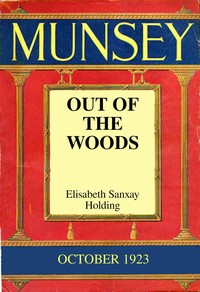
Out of the Woods — Background and Themes
(0 User reviews)
72
Project Gutenberg
2022
Not confirmed
Short stories; Orphans -- Fiction; Young women -- Fiction; Man-woman relationships -- Fiction; Families -- Fiction; Grandmothers -- Fiction
Readers of public-domain and historical texts
Project Gutenberg digital edition
en
Edition facts
Words
8,854
Reading time
39 min
Text sections
1
For Out of the Woods — Background and Themes, the stored edition analysis reports 8,854 words, 39 min estimated reading time, and 1 detected text section.
The text analysis averages about 15.4 words per sentence, while the detected sections provide another way to judge how the source is divided.
Project Gutenberg metadata also associates the work with “Short stories,” connecting these edition facts with the source record’s subject description.
Source:
Project Gutenberg record #67254
A retelling of Little Red Riding Hood set in 1920s America, where orphaned Ethel, caught between her Italian mother's family and wealthy paternal relatives, navigates a manipulative suitor and her own ambition to sing. The story shifts from fairy-tale parody to psychological tension.
Read the complete public-domain text at its original source.
Read on Project GutenbergThe narrator begins by openly acknowledging the story's debt to Little Red Riding Hood, then immediately subverts expectations: the grandmother will not be eaten, the heroine carries candied fruit instead of cake, and her expression is sulky, not cheerful. This playful, self-aware opening sets a tone that is both ironic and direct, but the narrative soon abandons fairy-tale lightness for a more somber realism. The voice shifts from arch commentary to a close, third-person focus on Ethel's internal conflict, particularly her sense of being a pawn in family disputes. The prose becomes tighter and more urgent as the story progresses, mirroring Ethel's growing unease.
A Fairy-Tale Frame with Modern Anxieties
The opening paragraphs deliberately echo the structure of a classic fairy tale, but the details are pointedly contemporary. Ethel is not a sweet, innocent girl but a discontented young woman who feels like a “helpless pawn” in family conflicts. The narrator’s wry aside that “red hoods are not in vogue” signals a self-conscious updating of the source material. However, the fairy-tale frame quickly dissolves into a more naturalistic portrayal of family dynamics. The Taylors’ pride in “newly acquired wealth” and their resentment of Ethel’s Italian grandparents introduce class and ethnic tensions absent from the original tale. This layering of modern anxieties onto a familiar story creates a dissonance that the narrative exploits: the reader expects a simple moral fable but instead encounters a psychologically complex situation.
The Wolf’s Voice: Patience as a Mask
Ladislaw, the “wolf” of the story, is characterized almost entirely through his speech and Ethel’s reactions to it. He speaks with “reasonable, kind, sympathetic” tones, but Ethel finds this “disquieting and mysterious.” His patience is described as more like “indifference than that of love,” a telling observation that undermines his apparent kindness. The dialogue reveals a power imbalance: Ladislaw offers protection and a career, but his persistence feels threatening. When Ethel refuses a kiss, his response shifts from “patient and humble” to a muttered “You shan’t treat me like a dog!” This sudden change in register—from controlled politeness to raw anger—is the story’s most dramatic shift in pace, marking a turning point where the fairy-tale wolf reveals his teeth.
Ethel’s Divided Self: Ambition and Guilt
Ethel’s internal monologue reveals a character torn between ambition and a “secret and bitter sense of guilt.” She rationalizes her decision to marry Ladislaw as a practical step toward a singing career, yet she cannot suppress the memory of her mother, who “held so steadfastly to her own ideals.” The narrative voice here is intimate and fragmented, capturing Ethel’s self-doubt through short, urgent sentences and rhetorical questions: “But why? … I don’t care anything about love.” The pace quickens as she approaches the railway station, with the “little wood” transforming into a “black and sinister forest” in her mind. This shift from internal debate to visceral fear mirrors the story’s overall movement from ironic distance to psychological immediacy, leaving the reader uncertain whether Ethel will escape or be consumed by her bargain.
The story’s brevity—under 9,000 words—belies its emotional density. Readers should pay attention to the subtle shifts in narrative tone: the opening’s playful irony gives way to a tense, almost claustrophobic focus on Ethel’s perspective. The ending, though not included here, is likely to hinge on the tension between fairy-tale expectation and realistic consequence. Consider how Holding uses the familiar structure to explore themes of agency, class, and the cost of ambition, all while maintaining a deceptively simple prose style.
Sometimes a story stays because it knows how ambition feels like a wolf—Ethel’s hunger to sing versus every polite trap set for her. I thought of that quiet ache reading through Jenny: A Novel — Key Ideas to Explore, how its own heroine treads similar ground between wanting and being wanted. Both linger, not loudly, but like a hand left resting on yours.
There are no reviews for this eBook.
There are no comments for this eBook.
Reader reflection
Before you leave, reflect on the book
Use these questions to collect your thoughts before moving on.
Your progress
0
/
10
2
How did the book work for you overall?
3
How likely are you to recommend this book?
4
Did the language feel accessible?
5
How original did the book feel?
6
How clearly were the main ideas presented?
7
Could you apply anything you learned?
8
Did you relate to its people, ideas, or situations?
9
What did this book teach you most?
10