1

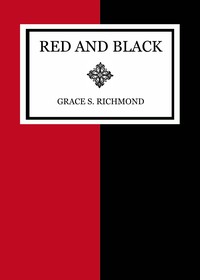
Red and Black — Context and Discussion
(0 User reviews)
375
Project Gutenberg
2021
Not confirmed
Physicians -- Fiction; Mate selection -- Fiction; Clergy -- Fiction; Male friendship -- Fiction; World War, 1914-1918 -- United States -- Fiction
Readers of public-domain and historical texts
Project Gutenberg digital edition
en
Edition facts
Words
123,216
Reading time
536 min
Text sections
29
Red and Black — Context and Discussion can be approached with a clearer sense of reading commitment from its source measurements: 123,216 words, 8 hr 56 min estimated reading time, and 29 detected text sections.
The text analysis averages about 17.6 words per sentence, while the detected sections provide another way to judge how the source is divided.
Project Gutenberg metadata also associates the work with “Physicians -- Fiction,” connecting these edition facts with the source record’s subject description.
Source:
Project Gutenberg record #65971
Grace S. Richmond's 1919 novel contrasts a self-doubting minister (Robert Black) and a confident physician (Redfield Burns) amid World War I. The opening scene—pulpit versus pew—establishes a central tension between vocation and personal desire, explored through restrained dialogue and characters who 'act' their emotions.
Read the complete public-domain text at its original source.
Read on Project GutenbergThe novel opens with a striking spatial metaphor: 'Their first sight of each other—Red and Black—was across the space which stretches between pulpit and pew.' This initial encounter between Robert McPherson Black, a young minister called to a new church, and Dr. Redfield Pepper Burns, a physician, frames the story's central dynamic. Richmond immediately establishes Black's self-doubt—he protests he is 'not good enough' for the position—while the committee chairman's 'friendly smile' hints at the social comedy to come. The narrative voice is observant, often noting characters' internal calculations: Black's nervousness in the vestry, the committee's sense of humor, and later, the way women like Annette Lockhart 'keep close hold of her emotions.' Richmond favors dialogue that reveals character through hesitation and understatement rather than direct confession.
Diction of Restraint and Performance
Richmond's characters frequently speak in measured, self-aware phrases that suggest a performance of composure. When Fanny Fitch asks Annette if she would marry Robert Black, Annette replies: 'You certainly must be a little mad to-day, my dear girl. Just because you are so hard hit, don't go to fancying that the woods are full of the slain.' The metaphor of battle—'hard hit,' 'slain,' 'stretcher-bearers'—is undercut by her cool tone. Similarly, Fanny later describes herself as 'going out or going in under cover of a man friend' to catch a 'casual glance from His Eminence.' The diction is theatrical: characters 'act' their parts, as Jane Ray admits: 'I'm acting this very minute, myself. I'm playing the part of one who is only politely interested.' This self-consciousness about social roles is a recurring verbal pattern.
Dialogue as Indirect Revelation
Conversations in the excerpts rarely state feelings outright. Instead, Richmond uses questions and evasions to convey subtext. When the committee asks Black to consider a call, he deflects with self-deprecation: 'I'm—I'm—why, I'm not good enough for you!' The chairman's reply—'Meaning virtue—or ability?'—turns the moment into a gentle test. Later, Fanny's interrogation of Nan about Robert is a series of feints: 'Honestly, now, can you tell me you wouldn't marry him, if he asked you?' Nan's answer is a masterclass in deflection, neither confirming nor denying. Richmond also uses reported speech to layer meaning: Fanny 'laughed unhappily' after a remark, and Jane observes that Fanny's eyes were 'red no longer' when she enters the shop. The dialogue is a surface beneath which characters negotiate trust, desire, and rivalry.
Description of Setting and Gesture
Richmond's descriptive passages are economical, often serving to underscore psychological states. The opening chapter contrasts the 'wide space' between pulpit and pew with the possibility that 'lines of communication are always open.' Later, the shop of Jane Ray becomes a stage for guarded interaction: Fanny discusses 'pie-crust tables' while Jane is 'very much on her guard.' Physical details—Fanny's 'lustrous blue eyes,' her 'charming' colour, Jane's 'dark eyes'—are noted but not lingered upon. Gestures carry weight: Fanny 'began suddenly to get out of her white apparel' as a pretext to leave, and Jane meets Fanny's eyes 'across the group of tables.' The setting is never merely background; it frames the characters' strategic movements.
Recurring Motifs of War and Performance
World War I is a constant but indirect presence, shaping characters' decisions without dominating the immediate action. Fanny wants to go overseas, but her mother 'has such a horror of war'; Jane plans to serve as a nurse's assistant. The war provides a backdrop for personal choices about duty and escape. More subtly, Richmond uses military language to describe emotional states: Fanny speaks of being 'hard hit,' and Nan jokes about 'stretcher-bearers.' The novel's title itself—Red and Black—suggests opposing forces, perhaps the minister's black gown and the doctor's red hair or the contrast between clerical and medical vocations. The excerpts show characters constantly performing roles—as minister, as friend, as potential volunteer—suggesting that identity is a matter of deliberate presentation.
Readers attentive to Richmond's craft will notice how she builds tension through what is left unsaid. The excerpts offer no resolution to the central relationships, but they establish a world where every conversation is a negotiation. Pay attention to the moments when characters pause, deflect, or adopt a tone of studied lightness—these are the hinges of the narrative. The novel rewards close reading of its dialogue and its quiet, telling details.
I keep thinking about that opening scene in Red and Black — the minister in his pulpit, the physician in the pew, both so quietly certain they're playing the wrong part. It reminded me of something gentler in The Big Idea — Background and Themes, where the same tug between duty and longing sits under the surface, unspoken but unmistakable. Funny how old books hold our own hesitations. I find myself turning that thought over at odd hours.
There are no reviews for this eBook.
There are no comments for this eBook.
Reader reflection
Take a moment to reflect on this book
Create a short personal record of your experience with this book.
Your progress
0
/
10
2
What was your overall reaction to the book?
3
Is this a title you would suggest to others?
4
What was the reading difficulty like?
5
Did it raise ideas you would like to talk about?
6
Did any part of the book stay with you emotionally?
7
How did the pace of the book feel?
8
How useful were the ideas in this book?
9
What is the main idea you are taking away?
10