1

The Strange Visitation — Key Ideas to Explore
(0 User reviews)
104
Project Gutenberg
2020
Not confirmed
Christmas stories; Didactic fiction; Ghost stories; Paranormal fiction; Religious fiction
Readers of public-domain and historical texts
Project Gutenberg digital edition
en
Edition facts
Words
32,215
Reading time
141 min
Text sections
4
This digital edition of The Strange Visitation — Key Ideas to Explore is described by source-level measurements including 32,215 words, 2 hr 21 min estimated reading time, and 4 detected text sections.
The text analysis averages about 15.7 words per sentence, while the detected sections provide another way to judge how the source is divided.
Project Gutenberg metadata also associates the work with “Christmas stories,” connecting these edition facts with the source record’s subject description.
Source:
Project Gutenberg record #64152
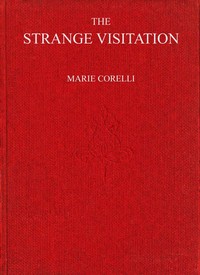
Marie Corelli's Christmas ghost story contrasts a miserly millionaire's spiritual desolation with domestic peace, using a goblin guide to expose his past sins and the hollowness of wealth.
Read the complete public-domain text at its original source.
Read on Project GutenbergThe opening paragraph of The Strange Visitation immediately establishes a central tension: a wild, howling storm on Christmas Eve, the very night meant for 'peace and goodwill.' Corelli personifies the wind as an 'angry cat' that 'scratched and tore,' setting a combative tone that clashes with the holiday's supposed serenity. This discord between external chaos and the season's ideals recurs throughout the narrative, framing the protagonist's internal conflict.
A Goblin's Accusations and the Weight of Past Wrongs
The story's supernatural element takes the form of a mocking goblin that accompanies the wealthy Josiah McNason. Rather than a traditional ghost, this entity serves as a relentless accuser, cataloging McNason's moral failures. In one excerpt, the goblin directly confronts him: 'You did it for Money—yes!—you've always done everything for Money!' This accusation is tied to a specific past wrong—jilting a woman named Lilias for financial gain. The goblin's language is biting and colloquial, calling McNason a 'CAD' and contrasting his loveless wealth with Lilias's happy marriage to a man who 'has Heart.' The goblin does not merely haunt; it argues, taunts, and forces McNason to witness the consequences of his choices, such as seeing Lilias through a barred garden gate, a moment that evokes 'an unforgiven sinner might look at the closed doors of Paradise.'
Wealth Versus Domestic Contentment
Corelli repeatedly juxtaposes McNason's material riches with the emotional poverty of his existence. The goblin spells out the contrast: 'She's poor and you're rich. But she's contented and you're wretched!' Lilias's home is described with imagery of natural beauty and warmth—'fresh-complexioned as the bloom on a peach,' 'full-bosomed,' 'serenest peace, love and tenderness.' In contrast, McNason is portrayed as isolated, unable to open the garden gate, and consumed by 'bitter jealousy' and 'wrathful impatience with Deity.' The narrative suggests that his wealth has not bought happiness or legacy; he has 'no heir to your name,' while Lilias has three sons. The goblin's remark that 'Heart is a curious thing' that 'makes Happiness' underscores the story's didactic bent, positioning emotional connection and family as true wealth.
The Christmas Eve Setting as Moral Backdrop
The story's Christmas Eve setting is not merely atmospheric but thematically integral. Corelli opens with a meditation on the anniversary's meaning, quoting Milton's 'Ode on the Morning of Christ's Nativity' to evoke a world where 'No war or battle's sound was heard.' This ideal of peace is immediately undercut by the storm and by McNason's inner turmoil. The goblin's revelations occur on this holy night, heightening the sense of moral judgment. The narrative questions whether a 'money-gorged, banknote-stuffed ruler of some octopus-like Trade' could exist in the era of angelic hymns. By placing McNason's spiritual crisis on Christmas Eve, Corelli frames his journey as a potential reckoning, though the excerpts leave his ultimate fate unclear. The setting thus serves as a contrast between the promise of redemption and the reality of human greed.
Readers should note that the excerpts provide only a partial view of McNason's arc. The goblin's role as a moral commentator suggests a didactic structure, but whether McNason reforms or remains trapped in his bitterness is not revealed here. Pay attention to how Corelli uses the goblin's voice—part satire, part sermon—to critique materialism, and observe whether the stormy atmosphere gives way to any resolution. The story's brevity (around 32,000 words) makes it a compact exploration of conscience and consequence.
Reading about the millionaire’s hollow Christmas made me think of my grandfather’s empty study, where gifts sat untouched. The Chapel on the Hill — Reading Notes once held that same quiet ache—a place where silence felt louder than any sermon. Both reminded me that loneliness isn’t the absence of people, but of warmth.
There are no reviews for this eBook.
There are no comments for this eBook.
Reader reflection
How did this book work for you?
Your answers remain private and are stored only in this browser.
Your progress
0
/
10
2
What was your overall reaction to the book?
3
Would you pass this book on to a friend?
4
What was the reading difficulty like?
5
How did the reading compare with what you expected?
6
Did it raise ideas you would like to talk about?
7
How would you describe its reading pace?
8
How distinctive were its ideas or approach?
9
What did this book teach you most?
10