1

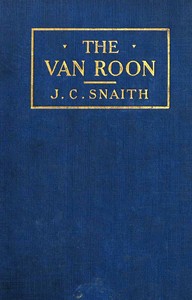
The Van Roon — Inside the Classic
(0 User reviews)
132
Project Gutenberg
2022
Not confirmed
Orphans -- Fiction; London (England) -- Fiction; Young women -- Fiction; Love stories; Uncles -- Fiction; Antique dealers -- Fiction; Art -- Fiction
Readers of public-domain and historical texts
Project Gutenberg digital edition
en
Edition facts
Words
92,937
Reading time
405 min
Text sections
74
For The Van Roon — Inside the Classic, the stored edition analysis reports 92,937 words, 6 hr 45 min estimated reading time, and 74 detected text sections.
The text analysis averages about 15.5 words per sentence, while the detected sections provide another way to judge how the source is divided.
Project Gutenberg metadata also associates the work with “Orphans -- Fiction,” connecting these edition facts with the source record’s subject description.
Source:
Project Gutenberg record #68520
An editorial note examining how J. C. Snaith's 1922 novel uses the antique shop setting, the concealed painting, and the orphan June's tense movements to build suspense and character, based on structural and imagistic evidence from the opening chapters.
Read the complete public-domain text at its original source.
Read on Project GutenbergThe Van Roon opens with a precise geography: a narrow street north of the Strand, east of the National Gallery, winding toward Long Acre. The shop of S. Gedge, Antiques, is introduced as an inconspicuous front for a business whose proprietor is himself an antique—a figure described as a cross between a hop-pole and a moulting vulture. The narrative voice blends connoisseurial lore with a dry, almost mocking eye for detail, noting the proprietor's prehistoric frock coat and jemimas of the period. This initial scene establishes a world where objects carry history and people are measured by their age and cunning, setting the stage for the central object: the painting called the Van Roon.
The Shop as Stage and Trap
The antique shop is not merely a setting but a confined space that shapes every action. The opening description emphasizes its narrowness and the proprietor's dependence on his assistant William, whose absence leaves the shop like a windjammer on a lee shore. This metaphor of a ship in distress recurs implicitly in the heroine June's later movements. The shop's back room, stairs, and the loose board beneath an oak chest become a geography of concealment and risk. When June retrieves the hidden picture, she must move the chest, prise up the board, and replace everything while hearing voices in the next room. The narrative tracks her every cautious step: opening drawers for a chisel, tiptoeing past the open door, bolting her room. The shop is a trap that forces her to calculate each second.
The Van Roon as Object of Fixation
The painting itself is referred to as a treasure, a thing of bigotry and virtue, and later as the Hoodoo—a term suggesting both a charm and a curse. June holds it to her bosom as a mother holds a child, a simile that underscores her protective desperation. The object's value is never stated in monetary terms; instead, it is defined by the lengths people will go to possess it. The old man's desire for the Van Roon is presented as a given, not explained. June's problem is not what the picture is worth but how to smuggle it out of the house. The narrative focuses on the physical act of wrapping it in brown paper and string, transforming it into a neat parcel. The object remains opaque, its power residing in the reactions it provokes.
Movement and Suspense in the Stairwell
The stairs in the shop become a repeated site of tension. June creeps up them expecting at every second to hear a harsh voice recall her. Later, she must steal downstairs, stopping at the sharpest bend to listen for voices. The architecture forces her into a rhythm of pause and advance. The narrative uses short, breathless sentences: Picture in hand, she tiptoed out of the shop as far as the stairs. Up the stairs she crept. This staccato movement mirrors her internal state—wrought up, shivering as if in the throes of fever. The stairwell is a liminal space between the shop's public front and the private rooms above, and Snaith exploits it to generate a sense of imminent discovery.
Voice and the Proprietor's Antique Persona
The proprietor, S. Gedge, is rendered through a series of grotesque comparisons: a moulting vulture, a hop-pole, a yellow parchment countenance of incredible cunning. His age is deliberately ambiguous—before dressing he might be anything, after tidying up he is at least seventy. The narrative voice is wry and detached, noting his tattered dressing gown and chessboard slippers with a touch of fantasy. This voice establishes a tone that is neither wholly sympathetic nor mocking. It observes the old man's lost air when William is away and his outs with the charwoman, but does not explain his motives. The effect is to make him a figure of comic menace, a gatekeeper whose decrepitude is both a weakness and a threat.
Readers attentive to structure will notice how Snaith builds suspense through confined spaces and repeated actions—moving furniture, listening at doors, wrapping parcels. The Van Roon itself remains a MacGuffin whose power is felt through the characters' physical responses. The novel's early chapters reward close attention to setting and gesture, as every creak of a stair or pause in conversation carries weight. The editorial note above is based solely on the opening excerpts; the full novel may develop these patterns or subvert them.
That rainy afternoon, The Van Roon lingered in my hands long after I finished—June’s cautious movements, the hidden painting, all that quiet tension. The shop’s dusty stillness made me think of other women in other rooms, waiting for secrets to surface. Then I remembered Three Loving Ladies — A Reader’s Guide, and the afternoon softened into something else entirely.
There are no reviews for this eBook.
There are no comments for this eBook.
Reader reflection
Before you leave, reflect on the book
Use these questions to collect your thoughts before moving on.
Your progress
0
/
10
2
How much did you enjoy the reading experience?
3
Is this a title you would suggest to others?
4
Did the language feel accessible?
5
What did you appreciate most?
6
Did the book meet your expectations?
7
Would you like to discuss this book with someone?
8
How clearly were the main ideas presented?
9
In one sentence, what did you learn?
10