1

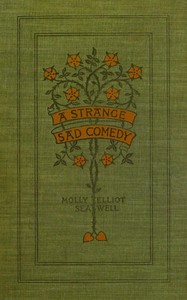
A Strange, Sad Comedy — A Closer Reading
(0 User reviews)
1469
Project Gutenberg
2022
Not confirmed
United States -- History -- Civil War, 1861-1865 -- Fiction; Virginia -- Fiction; Newport (R.I.) -- Fiction; United States -- Social life and customs -- 1865-1918 -- Fiction
Readers of public-domain and historical texts
Project Gutenberg digital edition
en
Edition facts
Words
57,853
Reading time
252 min
Text sections
16
The catalog record for A Strange, Sad Comedy — A Closer Reading provides practical reading context through 57,853 words, 4 hr 12 min estimated reading time, and 16 detected text sections.
The text analysis averages about 19.1 words per sentence, while the detected sections provide another way to judge how the source is divided.
Project Gutenberg metadata also associates the work with “United States -- History -- Civil War, 1861-1865 -- Fiction,” connecting these edition facts with the source record’s subject description.
Source:
Project Gutenberg record #67659
Molly Elliot Seawell's 1892 novel moves between a decaying Virginia plantation and fashionable Newport, tracking a young heiress caught between an aging suitor's will and her grandfather's genteel poverty. The narrative relies on ironic contrasts, legal documents, and sudden reversals.
Read the complete public-domain text at its original source.
Read on Project GutenbergThe novel opens in November 1864 with Colonel Archibald Corbin reading The Spectator in his shabby Virginia library, a scene that immediately establishes the work's structural reliance on juxtaposition. The Colonel's placid composure—he is "no more a colonel than he was a cheese-box"—contrasts with the war raging outside, while his genteel poverty is cataloged through specific objects: a mended stock, a rag carpet, a gold-headed cane whose knob has been donated to the church. This attention to material decay recurs throughout, as does the motif of wills and inheritances. The narrative later shifts to Newport, Rhode Island, where the same concerns reappear in a different social register.
Recurring Objects and Their Meanings
Seawell builds scenes around tangible items that carry emotional and economic weight. The silver plate at Corbin Hall is hoarded while a threshing-machine is sold to bring home a dead son's body. The Colonel's gold-headed cane, sacrificed to the collection plate, mirrors the larger pattern of sacrifice and display. In Newport, pearl bracelets and wills become the currency of negotiation. The will itself—read aloud, witnessed, and later discussed—functions as both plot device and symbol of control. These objects are never merely decorative; they mark the distance between appearance and reality, and between Virginia's agrarian past and Newport's mercantile present.
Movement Between Two Worlds
The novel's structure depends on geographic and social shifts. The opening at Corbin Hall, with its "shabby old library" and rag carpet, establishes a world of inherited poverty and pride. Later scenes in Newport introduce a different kind of transaction, where money is openly discussed and marriage is a business proposition. The journey between these settings is not described in the excerpts, but the contrast is sharp: Virginia's war-impoverished gentility versus Rhode Island's summer colony. This movement allows Seawell to examine how the same behaviors—reading wills, negotiating inheritances, managing appearances—play out in radically different contexts.
The Comedy of Misunderstandings
Seawell generates comedy through characters who misread each other's intentions. When Letty learns of Mr. Romaine's will, she is "thoroughly puzzled" and feels he has taken "an unwarrantable liberty." The Colonel's reaction—"The old ass!"—breaks his habitual placidity. The comedy arises from the gap between what characters say and what they mean, and from the repeated failure of direct communication. Letty's "half-stifled, half-laughing voice" captures the tone: the situation is absurd, but the stakes are real. The narrative voice maintains a dry irony, undercutting sentiment with precise observation.
Legal Documents as Plot Engines
Wills and their disclosure drive the action. Mr. Romaine's will is read to witnesses before being revealed to the beneficiary, creating a chain of secondhand knowledge. The Colonel's earlier will, mentioned in passing, echoes this pattern. Seawell treats legal instruments as dramatic devices: they force characters to confront hidden motives and future obligations. The will is not a static document but a source of conflict, discussed, interpreted, and resisted. This focus on written agreements gives the novel a structural clarity, as each revelation of a document shifts the balance of power between characters.
Readers attentive to the novel's movement between Virginia and Newport will notice how Seawell uses setting to amplify character. The same impulses—pride, calculation, affection—take different forms in each location. The comedy depends on recognizing these patterns without expecting resolution. The excerpts offer no ending, but the title itself suggests that the narrative will sustain its ironic tone to the last.
Reading that old tale of the Virginia plantation, with its quiet ironies and legal reversals, left me thinking about the weight of history in our lives. It drifted in a familiar, almost wistful way toward Margaret Maliphant — A Reader’s Guide, whose own gentle examinations of character feel like a shared, murmured conversation between old friends over the same fading photographs.
There are no reviews for this eBook.
There are no comments for this eBook.
Reader reflection
Before you leave, reflect on the book
Use these questions to collect your thoughts before moving on.
Your progress
0
/
10
2
How did the book work for you overall?
3
How likely are you to recommend this book?
4
Did the language feel accessible?
5
What did you think about the pace?
6
Would you read this book again?
7
Did you gain anything practical from the text?
8
Did the book deliver what you hoped for?
9
Which lesson or insight stayed with you?
10