1

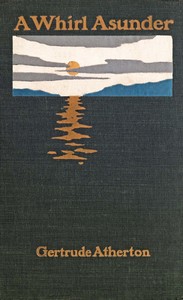
A Whirl Asunder — A Reader’s Guide
(0 User reviews)
1684
Project Gutenberg
2022
Not confirmed
Triangles (Interpersonal relations) -- Fiction; Man-woman relationships -- Fiction; Betrothal -- Fiction; California -- Social life and customs -- 19th century -- Fiction
Readers of public-domain and historical texts
Project Gutenberg digital edition
en
Edition facts
Words
29,916
Reading time
131 min
Text sections
19
For A Whirl Asunder — A Reader’s Guide, the stored edition analysis reports 29,916 words, 2 hr 11 min estimated reading time, and 19 detected text sections.
The text analysis averages about 14.1 words per sentence, while the detected sections provide another way to judge how the source is divided.
Project Gutenberg metadata also associates the work with “Triangles (Interpersonal relations) -- Fiction,” connecting these edition facts with the source record’s subject description.
Source:
Project Gutenberg record #67075
Atherton's novel uses a restless narrative structure, shuttling between California's rugged landscapes and intimate interiors, to trace a love triangle's unraveling through sensory detail and psychological tension.
Read the complete public-domain text at its original source.
Read on Project GutenbergThe novel opens with a jolt: Clive, the English protagonist, abruptly leaves a train to walk the remainder of his journey to Yorba. This decision, born of six days of travel discomfort and a desire for solitude, immediately establishes a pattern of movement and restlessness that pervades the narrative. Atherton contrasts the claustrophobic train—rocking, shrieking, and climbing dizzying heights—with the stark, rigid forests that seem not to have quivered since time began. The landscape is not merely a backdrop but an active force, shaping mood and action.
From the outset, the story alternates between external motion and internal reflection. Clive's physical journey mirrors his emotional state: tired, nervous, and questioning his impending marriage. The structure of the novel, with its frequent shifts between outdoor scenes and enclosed spaces, reinforces this tension between freedom and constraint.
Movement as a Structural Principle
The narrative is propelled by a series of departures and arrivals. Clive's descent from the train is the first of many such moments. Later, Helena Belmont retreats to her boudoir, a room that itself contains multiple thresholds: opening into a bedroom and a library. The text lingers on the layout of her private space, emphasizing doors and windows that connect to the forest beyond. This architectural detail mirrors the characters' psychological states—Helena sits for hours, profoundly stirred, while the Castilian roses nod against the pane. The telephone, a device that intrudes from the outside world, becomes a source of irritation, a reminder of connections she wishes to control.
Atherton uses movement between scenes to highlight emotional shifts. The forest, the camp, the hotel, the boudoir—each location carries a distinct atmosphere. The train journey, described with visceral detail (the brush scraping windows, the eye looking down into a cañon), establishes a rhythm of danger and fascination that recurs in quieter moments, such as Helena's gathering of pipe ashes by the creek.
Recurring Images: Ashes, Trees, and Thresholds
Certain images recur with deliberate precision. The ashes from Clive's pipe, which Helena collects and holds in her hand, are a tactile remnant of his presence. This gesture—at once tender and possessive—echoes the novel's concern with what remains after contact. Trees appear repeatedly: the rigid trunks of the forest, the redwood panels of Helena's boudoir, the log by the creek where Clive had leaned. These are not mere scenery but objects charged with memory and desire.
Thresholds—doors, windows, train platforms—mark moments of decision or transition. Clive steps off the train; Helena moves from her boudoir to the telephone room. The narrative often pauses at these boundaries, allowing the reader to feel the weight of what is being entered or left behind. The redwood mantel built to the ceiling, the deep window seats, the garden wall—all suggest enclosures that are both protective and confining.
The Psychology of Interior Spaces
Helena's boudoir is described in meticulous detail: the panelled redwood, the arched and beamed ceiling, the Smyrna rugs with their almost-black red. This room is a sanctuary, yet it is also a stage for her internal drama. Atherton devotes considerable attention to the arrangement of furniture and the quality of light, creating a space that reflects Helena's refined sensibility and her isolation. The library, with its bare floor and upright chairs, offers a contrasting austerity.
The telephone, placed in a small room by the front door, represents the intrusion of the outside world into this carefully controlled environment. Helena's desire to have it taken out underscores her wish to preserve her private realm. The narrative moves between these interiors and the forest, where Helena walks and dreams. The contrast between the boudoir's rich textures and the forest's raw beauty mirrors the conflict between civilization and instinct that runs through the novel.
Voice and Dialogue: Markers of Character
Atherton uses dialogue to distinguish characters and to advance the theme of cultural difference. The conductor's laconic "O. K." and the old man's remark, "Well, you be an Englishman, I guess," immediately mark Clive as an outsider. His haughty reply—"Yes, I am an Englishman"—reveals his pride and his discomfort with the casual familiarity of California. The old man's speech, with its rustic diction and blunt observations, contrasts with Clive's more formal English.
Helena's dialogue, as filtered through the Chinese butler's broken English ("Mr. Lollins wantee you at telephone, missee"), introduces another layer of social hierarchy and communication. The telephone itself becomes a symbol of the novel's concern with connection and misconnection. The characters' voices, whether direct or reported, reveal their social positions and their emotional states. Clive's internal monologue, with its complaints about dirt and lack of romance, is as telling as his spoken words.
Readers attentive to the novel's structure will notice how Atherton builds tension through the juxtaposition of movement and stasis, openness and enclosure. The excerpts suggest a work that is as concerned with the spaces between events as with the events themselves. The telephone, the train, the boudoir—each is a node in a network of desire and constraint. The narrative's power lies in its ability to make these physical details resonate with emotional weight, inviting the reader to attend to the subtle shifts in setting and mood that define the characters' inner lives.
That rainy afternoon, A Whirl Asunder left me restless, its characters forever shifting between cliffside light and shut-door gloom. When the storm finally softened, my fingers drifted to Dr. Paull's Theory: A Romance — Edition Insights, and I found the same quiet ache there—a different sort of unraveling, slower, more patient, the way damp pages curl. Both lingered with me long after the lamps were lit.
There are no reviews for this eBook.
There are no comments for this eBook.
Reader reflection
Take a moment to reflect on this book
Create a short personal record of your experience with this book.
Your progress
0
/
10
2
How much did you enjoy the reading experience?
3
Would you encourage someone else to read it?
4
How demanding did the text feel?
5
What did you think about the pace?
6
How would you rate its originality?
7
Would you read this book again?
8
How well did it match your expectations?
9
What is the main idea you are taking away?
10