1

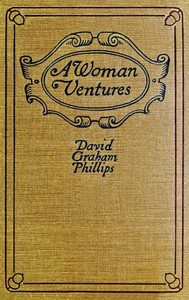
A Woman Ventures: A Novel — Themes and Context
(0 User reviews)
1203
Project Gutenberg
2022
Not confirmed
United States -- Social life and customs -- Fiction; Mate selection -- Fiction; Fathers -- Death -- Fiction; Man-woman relationships -- Fiction; Women journalists -- Fiction; Husbands -- Death -- Fiction
Readers of public-domain and historical texts
Project Gutenberg digital edition
en
Edition facts
Words
84,043
Reading time
366 min
Text sections
36
The catalog record for A Woman Ventures: A Novel — Themes and Context provides practical reading context through 84,043 words, 6 hr 6 min estimated reading time, and 36 detected text sections.
The text analysis averages about 14.2 words per sentence, while the detected sections provide another way to judge how the source is divided.
Project Gutenberg metadata also associates the work with “United States -- Social life and customs -- Fiction,” connecting these edition facts with the source record’s subject description.
Source:
Project Gutenberg record #67130
An editorial note examining the novel's structural use of chapter titles as ironic markers, the recurring motif of shipwreck and desert island metaphors, and the movement between Washington, London, and a South Dakota divorce court.
Read the complete public-domain text at its original source.
Read on Project GutenbergThe chapter titles of A Woman Ventures announce a pattern of ironic displacement. The opening chapters—'The Shipwreck,' 'The Desert Island,' 'Sail—Ho!'—borrow the language of castaway narratives, yet the actual shipwreck is a death from pneumonia, and the desert island is Washington society. This structural choice signals that the novel will treat its heroine Emily’s emotional and social ordeals through the lens of adventure fiction, but with the stakes inverted: the perils are domestic and professional, not maritime.
David Graham Phillips moves his characters between Washington, London, and a South Dakota county seat with a journalist’s eye for the telling detail. The divorce scene in Petersville—lasting 'a minute and three-quarters'—is rendered with a brevity that contrasts sharply with the elaborate courtship that precedes it, creating a structural dissonance that underscores the emptiness of legal formalities.
Chapter Titles as Ironic Signposts
The table of contents reads like a parody of a Robinsonade. 'The Shipwreck' is not a storm at sea but the death of Wentworth Bromfield, a minor State Department official whose career 'proved to be a sonorous name for a decent burial of energy and prospects.' 'The Desert Island' is the social world of Washington, where Emily must navigate after her father’s death. Later chapters such as 'A Black Flag' and 'The Penitent Pirate' sustain the nautical metaphor, but the pirates are suitors and the treasure is a secure marriage.
This structural irony extends to the chapter 'A Precipice,' which does not describe a cliff but a moment of romantic crisis. By consistently applying adventure vocabulary to drawing-room conflicts, Phillips creates a tension between the expected drama of the titles and the actual, quieter events. Readers familiar with the castaway genre will recognize the pattern of isolation, encounter, and rescue—but here the rescue is often ambiguous, and the island is never left behind.
Recurring Images of Eating and Appetite
One of the most striking recurring details is the use of food to reveal character. When Marlowe, after his marriage to Victoria, watches her 'tackle' three mutton chops, the description is deliberately animalistic: 'her long white teeth closed upon a mouthful of chop and potato; and as she chewed with now one cheek and now the other distended and with her glorious eyes bright like a feeding beast’s.' The passage is a turning point, collapsing the romantic ideal into a visceral, comic horror.
Earlier, Emily’s father is described as having 'drawn his salary year after year' and 'gone languidly through his brief daily routine'—a different kind of consumption, one of energy and ambition. The novel uses appetite as a measure of character: Victoria’s greedy eating mirrors her emotional voraciousness, while Marlowe’s nausea at the breakfast table signals his revulsion. The image recurs in the chapter 'Where Pain is Pleasure,' suggesting that the characters’ hungers—for love, status, or escape—are never fully satisfied.
Movement Between Settings as Moral Geography
The novel’s geography is not merely scenic but moral. Washington appears as a place of 'insidiously lazy occupation,' where Bromfield’s potential is buried. London is the stage for Marlowe’s infatuation with Victoria, a city of 'shimmering stream of sound' that masks her intellectual emptiness. The most striking shift is to Petersville, South Dakota, an 'obscure county seat' where a divorce is granted in under two minutes. The speed and obscurity of the proceeding contrast with the elaborate social rituals of the Eastern cities.
Phillips uses these movements to chart the characters’ moral trajectories. Emily’s journey from Washington to London and back—she is a woman journalist, according to the catalog subjects—suggests a search for independence that the novel’s structure may or may not endorse. The chapter 'Back to the Mainland' implies a return to civilization, but the mainland is ambiguous: is it the United States, or a state of emotional clarity? The settings are never neutral; each carries a weight of expectation and disappointment.
The Divorce as Structural Pivot
The divorce scene in Petersville is a structural hinge. It occurs after Marlowe’s marriage to Victoria and before the honeymoon, but the narrative order is deceptive: the divorce is granted before the wedding, yet the reader learns of it only after the fact. This temporal dislocation mirrors the characters’ own confusion. Marlowe cabled for leave, sailed, 'established a residence,' and returned to New York—all in a few paragraphs that compress months into a bureaucratic blur.
The trial itself is almost absurdly brief: 'a minute and three-quarters—consumed in reading Emily’s letter and in Marlowe’s testimony.' The novel does not linger on the legal process; instead, it moves immediately to the honeymoon, where the consequences of the divorce become apparent. This structural choice emphasizes the gap between legal form and emotional reality. The divorce is a transaction, but the marriage it enables is a trap. The chapter 'A Compromise with Conventionality' suggests that the novel is aware of the ironies of its own plot, and the reader is left to weigh the cost of these compromises.
Readers attentive to the novel’s structure will find that its chapter titles, food imagery, and geographic shifts form a coherent pattern of ironic commentary on marriage and independence. The excerpts do not reveal whether Emily’s venture succeeds or fails, but they make clear that the novel is less a romance than a dissection of the romantic illusions that drive its characters. Approach the text as a social satire disguised as a love story, and the chapter headings as clues to the author’s skeptical stance.
Some stories echo like a day after a storm. The way A Woman Ventures uses its chapter titles as quiet ironies—those shipwreck metaphors staying with me long after the last page. That same lingering ache from failed navigation appears again in A Whirl Asunder — A Reader’s Guide, where wreckage feels almost familiar, almost shared. I still think about those desert island moments, alone yet somehow understood.
There are no reviews for this eBook.
There are no comments for this eBook.
Reader reflection
What was your reading experience?
Capture what you thought, learned, and would like to remember.
Your progress
0
/
10
2
How did the book work for you overall?
3
Is this a title you would suggest to others?
4
How easy was the book to follow?
5
Did the book offer a fresh perspective?
6
Did the story or argument move comfortably?
7
Did the book give you something worth debating?
8
Which element worked best for you?
9
Which lesson or insight stayed with you?
10