1

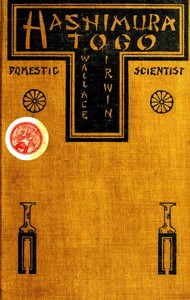
Hashimura Togo, Domestic Scientist — Key Ideas to Explore
(0 User reviews)
839
Project Gutenberg
2021
Not confirmed
Humorous stories; United States -- Social life and customs -- 20th century -- Fiction; Household employees -- Fiction; Japanese -- United States -- Fiction
Readers of public-domain and historical texts
Project Gutenberg digital edition
en
Edition facts
Words
33,676
Reading time
147 min
Text sections
26
Before opening Hashimura Togo, Domestic Scientist — Key Ideas to Explore, the edition data offers a quick orientation: 33,676 words, 2 hr 27 min estimated reading time, and 26 detected text sections.
The text analysis averages about 10.3 words per sentence, while the detected sections provide another way to judge how the source is divided.
Project Gutenberg metadata also associates the work with “Humorous stories,” connecting these edition facts with the source record’s subject description.
Source:
Project Gutenberg record #65189
A Japanese domestic servant in early 20th-century America narrates his misadventures in housekeeping, firefighting, and romance with a distinctive, grammatically playful voice that blends scientific pretensions with cultural misunderstandings.
Read the complete public-domain text at its original source.
Read on Project GutenbergFrom the opening "Introducement to Mrs. Public," the narrator Hashimura Togo announces his ambition to teach "Science in kitchen, rugs, vacuum cleaners, babies etc" to all homes. His voice is immediately distinctive: he writes that scientists learn wisdom "by manufacturing wicked smells, explosions and unhappiness," and warns that if "occasional folks expire dead from eating what I cook, they should not get irritable." This blend of earnestness, malapropism, and deadpan humor sets the tone for a series of episodic chapters that follow Togo through various domestic employments.
The excerpts suggest a structure built around Togo's encounters with American households, each presenting new challenges—from furnace-tending to fly-swatting. The catalog subject "Japanese -- United States -- Fiction" and the illustrator's note that "the nature of the book requires many oddities of word, spelling, and punctuation" signal that the humor derives partly from Togo's nonstandard English and cultural perspective.
Togo's Unreliable English as a Comic Device
The excerpts reveal a carefully constructed idiolect. Togo uses "snib" for "snapped," "gosp" for "gasped," and "agnosticate" for "agonize." He refers to a house as "covered with extremely wooden decorations" and speculates that Queen Anne might have been "empress of Coney Island." These coinages are not random errors but consistent substitutions that create a recognizable voice. The transcriber's note warns that "many oddities of word, spelling, and punctuation" make error identification impossible, indicating the text deliberately preserves these quirks.
Togo's logic also follows its own rules. When told a fire shovel has sentimental value, he asks "How much has you been offered?" When his employer frets about no fire insurance, he responds "Then it would not pay to burn it!" This pattern—taking figurative language literally and applying practical reasoning to emotional statements—generates much of the humor.
Domestic Science as a Source of Conflict
Togo frames his work as scientific, but the results are catastrophic. He reads "First Ade to Fires" and prepares to fight blazes, yet his interventions typically cause more damage. The chapter titles hint at this pattern: "Togo Swats the Fly" and "Togo Becomes a Fire Hero" promise mishaps. In the excerpt, Togo's fire-preparation involves sprinkling salt down chimneys and throwing wet blankets over people—advice taken from a pamphlet bound in "4th of July color."
The humor often targets American domestic pretensions. Mrs. Fogg's house is full of "cute jugs and pitchers walking over shelves & tables resembling decorated bugs" and a portrait of "Uncle Seth, famous hero, who was scared to death in Battle of Bully Run." Togo's observations puncture these sentimental attachments, though his own scientific pretensions are equally absurd.
Recurring Characters and Situations
The excerpts introduce a small cast that likely recurs. Togo's cousin Nogi appears in the frontispiece caption, helping pass salad to the "Daughters of Samantha." The Irish cook Hilda Katz, nursing a broken heart over a hack-driver named William, provides a foil for Togo's obliviousness. When she laments that William sent "67 doz assorted love-letters," Togo suggests they "might make a sad novel, if printed among pictures."
The chapter list shows a range of settings: Togo's Thursdays Out, Moving Day, at the Seashore, and Christmas Day in the Morning. This episodic structure suggests the book can be read in short bursts, with each chapter presenting a self-contained comic situation. The illustrations by Strothmann, mentioned in the front matter, likely amplify the visual humor of Togo's predicaments.
Reading the Book as a Period Piece
Published in 1914, the book reflects early 20th-century attitudes toward immigration, class, and domesticity. Togo's position as a Japanese servant in a white American household places him in a specific social hierarchy, and his narration both conforms to and subverts stereotypes. The humor depends on readers recognizing the gap between Togo's self-presentation as a scientist and his actual incompetence, but also on his sharp observations of his employers' foibles.
The catalog subject "United States -- Social life and customs -- 20th century -- Fiction" suggests the book offers period detail about household technology, fashion, and social rituals. Togo's encounters with vacuum cleaners, furnaces, and "Weak-Enders" (likely weekend guests) provide glimpses of domestic life. Readers interested in the history of humor or immigrant narratives may find this a useful primary source, though the excerpts are too limited to assess the book's treatment of race or cultural conflict.
The excerpts present Togo as a narrator whose voice is the book's central attraction. His malapropisms, literal-mindedness, and scientific posturing create a consistent comic persona. Readers should expect episodic chapters that reward dipping in and out, with each incident building on the same linguistic and situational humor. The book does not appear to develop a continuous plot; instead, it offers a series of domestic disasters filtered through Togo's unique perspective. Approach it as a character-driven comedy of errors rather than a novel with rising action or resolution.
That rainy afternoon, I kept returning to Hashimura Togo’s clumsy tenderness—his earnest attempts to master a world that kept slipping sideways. The humor softened into something quieter, almost melancholy. Later, pulling down a dusty shelf, I found The Strange Visitation — Key Ideas to Explore, and there it was again: that same ache of being a stranger in one’s own life, told through strangeness rather than laughter.
There are no reviews for this eBook.
There are no comments for this eBook.
Reader reflection
Your personal reading reflection
Build a private reading journal entry for this title.
Your progress
0
/
10
2
Was reading this book enjoyable?
3
Would you encourage someone else to read it?
4
How demanding did the text feel?
5
Did you relate to its people, ideas, or situations?
6
Could you see yourself revisiting this book?
7
How understandable was the text?
8
How useful were the ideas in this book?
9
What is the main idea you are taking away?
10