1

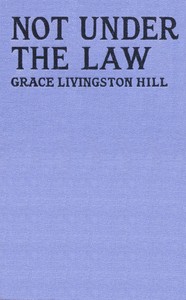
Not Under the Law — A Closer Reading
(0 User reviews)
129
Project Gutenberg
2022
Not confirmed
Young women -- Fiction; Love stories; Christian fiction; Man-woman relationships -- Fiction; Nineteen twenties -- Fiction
Readers of public-domain and historical texts
Project Gutenberg digital edition
en
Edition facts
Words
102,155
Reading time
445 min
Text sections
35
For Not Under the Law — A Closer Reading, the stored edition analysis reports 102,155 words, 7 hr 25 min estimated reading time, and 35 detected text sections.
The text analysis averages about 18.1 words per sentence, while the detected sections provide another way to judge how the source is divided.
Project Gutenberg metadata also associates the work with “Young women -- Fiction,” connecting these edition facts with the source record’s subject description.
Source:
Project Gutenberg record #67977
In this 1924 novel, Grace Livingston Hill opens with Joyce Radway, a young woman burdened by domestic labor and family tension after her aunt's death. The excerpts show a kitchen wreck, a haughty employer, and a protagonist who studies for exams while enduring her cousin's taunts. The catalog subjects of romance and Christian fiction are not yet evident in the opening chapters, which focus on gritty household work.
Read the complete public-domain text at its original source.
Read on Project GutenbergThe novel begins not with romance but with a kitchen door standing open and a young woman, Joyce Radway, moving between stove and table, exhausted and tearful. The first chapter establishes a world of domestic labor: Joyce prepares meals, scrubs a filthy sink, and lights a laundry stove to heat water. Her cousin Eugene scolds her for keeping a light burning late, accusing her of reading novels when she is actually studying for a teaching examination. The catalog subjects list this as a love story and Christian fiction, but the opening excerpts contain no romance and no explicit religious content—only a young woman's struggle to earn a living and keep her dignity.
A Kitchen as a Character
The most vivid presence in the early pages is the kitchen itself. When Joyce arrives at Mrs. Powers's house, she finds a room “stacked with soiled dishes in every available spot,” with greasy dishwater, burned food on plates, and a floor grimy with spills. The refrigerator is worse than anything she has seen. Hill describes the mess in precise, sensory detail: potato peelings, chicken bones, a left-over lamb chop, a bowl of chicken gravy. Joyce must clear a spot on the table just to begin cooking. The kitchen is not a backdrop but an obstacle—a test of her resourcefulness and stamina. This emphasis on physical labor and domestic chaos is more prominent in the excerpts than any hint of a romantic plot.
The Weight of Unspoken Tears
Joyce's emotional state is conveyed through bodily sensation rather than interior monologue. The tears “seemed to have been scorching her eyelids since early morning” and “flowing back into her heart till its beating was almost stopped by the deluge.” She controls herself when her cousin sneers at her, answering “in a steady voice.” Later, facing the wreck of Mrs. Powers's kitchen, she stands “appalled” in her new blue dress. The narrative stays close to her physical exhaustion: “weary in every bone and sinew.” Hill uses these somatic details to show a young woman who is overworked and undervalued, but who does not break down—she simply keeps moving.
The Absence of Romance in the Opening
Despite the catalog classification as a love story and Christian fiction, the excerpts from the first chapter contain no romantic interest, no male love interest, and no religious language. The only men mentioned are Joyce's cousin Eugene, who is cruel, and his father Hiram Massey, whose framed picture “never smiled at her.” The central relationship is between Joyce and her employers—first her cousin's family, then Mrs. Powers, who hires her for ten dollars. The narrative tension comes from household tasks and financial pressure. Readers expecting a romance will have to wait; the novel begins as a story about work, survival, and the indignities of dependence.
Evidence of the 1920s Setting
The catalog subject “Nineteen twenties” is supported by small period details. Joyce lights a gas range and a laundry stove in the cellar. The electric light bill is a point of contention. Mrs. Powers expects dinner at seven and takes a nap in the afternoon. The kitchen has a refrigerator, though it is filthy. These details place the story in a modernizing domestic world, where electricity and gas are common but household labor remains heavy. The novel's 1924 publication date aligns with this setting, and the excerpts show a society where young women like Joyce are expected to work for wages in other people's homes, with little power to refuse.
The excerpts from Not Under the Law reveal a novel that begins in the grit of daily work rather than in the glow of courtship. Joyce Radway's story is one of endurance: she studies, cleans, cooks, and negotiates with difficult relatives and employers. Readers who come to this book expecting a conventional romance may be surprised by the detailed attention to domestic labor and the absence of a love interest in the opening chapters. The title itself—a phrase from the New Testament—hints at a spiritual dimension that has not yet appeared in the text. The novel rewards attention to its material world and its quiet, determined protagonist.
Reading about Joyce at that wreck of a kitchen, I remembered my own late nights studying by a dim lamp, feeling unseen. That same quiet ache of striving appears in The hope of happiness — Inside the Classic, where the protagonist’s grit feels less like plot and more like a hand on my shoulder. It reminds me we’ve all endured that long hallway.
There are no reviews for this eBook.
There are no comments for this eBook.
Reader reflection
Take a moment to reflect on this book
Create a short personal record of your experience with this book.
Your progress
0
/
10
2
Did this book hold your interest?
3
Would you encourage someone else to read it?
4
How much effort did this book require?
5
Did the book offer a fresh perspective?
6
What was the strongest part of the book?
7
Was the book easy to understand?
8
How valuable was this book for your own interests?
9
What is the main idea you are taking away?
10