1

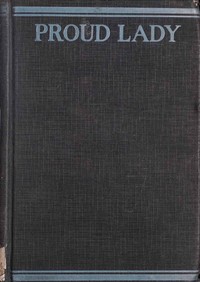
Proud Lady — Edition Insights
(0 User reviews)
106
Project Gutenberg
2020
Not confirmed
Triangles (Interpersonal relations) -- Fiction; Man-woman relationships -- Fiction; United States -- Social life and customs -- 19th century -- Fiction; Middle West -- Fiction; Husband and wife -- Fiction
Readers of public-domain and historical texts
Project Gutenberg digital edition
en
Edition facts
Words
84,117
Reading time
366 min
Text sections
41
The catalog record for Proud Lady — Edition Insights provides practical reading context through 84,117 words, 6 hr 6 min estimated reading time, and 41 detected text sections.
The text analysis averages about 13.8 words per sentence, while the detected sections provide another way to judge how the source is divided.
Project Gutenberg metadata also associates the work with “Triangles (Interpersonal relations) -- Fiction,” connecting these edition facts with the source record’s subject description.
Source:
Project Gutenberg record #62478
Neith Boyce's 1923 novel opens with Mary Lavinia watching her mother storm off to church as a train brings soldiers home from the Civil War. The excerpts trace a marriage strained by domestic duty and a husband's demands for pleasure, set against a Midwestern landscape of sharp springs and autumnal drives.
Read the complete public-domain text at its original source.
Read on Project GutenbergThe novel begins with a precise sensory moment: church bells, a train whistle, and a mother's angry departure. Mary Lavinia stands in the doorway, listening as the train brings home a handful of soldiers from a war that has emptied the town. The spring air is sharp, the trees a light brilliant green, and the house quiet after a storm. Boyce establishes her protagonist's beauty—tall, auburn-haired, proud—and her position between a bristling mother and a father hidden behind a closed door. The opening is less about plot than about atmosphere and restraint: Mary shivers in her print dress, holding her breath, waiting. The war is already over; what remains is the aftermath, felt in the silence and the absence of cheering.
A Marriage Measured in Small Conflicts
The middle excerpt shows Mary and her husband Laurence on a drive. The scene is deceptively domestic: a bright autumnal day, yellow leaves, a strong breeze. But the conversation quickly turns to complaint. Laurence wants more of Mary's attention—fewer children, more pretty dresses, more pleasure. Mary counters with duty: "bringing up a family isn't all pleasure." The horses shy at a paper; Laurence lashes them, then turns his irritation on Mary. The argument is not about grand betrayals but about the texture of daily life: a silk dress left unmade, an evening lost to a baby. Boyce renders the marriage through these small, sharp exchanges, where affection and peevishness alternate like the wind against the buggy.
Voice and Silence as Structural Tools
Boyce gives Mary a quiet, measured voice—she remonstrates, smiles, protests—while Laurence speaks in longer, more impatient bursts. His lines run on: "I care a lot more about you than I do about them—but it isn't the same with you." Mary's replies are shorter, often deflecting. The dialogue reveals a power imbalance not through overt conflict but through rhythm: Laurence demands, Mary deflects. The narrator also lingers on what is not said. In the opening, Mary listens to the train, to her father's cough behind a closed door, to the rustling of paper. These sounds mark the boundaries of her world—the domestic, the absent, the unspoken. The novel's tension lies in these silences as much as in the words exchanged.
Setting as Emotional Register
The excerpts use weather and landscape to mirror emotional states. The opening spring is "sharp, with a damp sweetness," the sunlight having little warmth—matching Mary's shiver and the lull after her mother's storm. The autumnal drive is "clear and crisp," with swirling yellow leaves and a strong breeze, but the beauty is undercut by the horses' nervousness and Laurence's temper. When he kisses Mary's cheek, she shuts her eyes "with pleasure, feeling the rush of the wind"—a moment of physical sensation that is quickly interrupted by his complaints. Boyce does not overstate the symbolism; instead, the setting operates as a continuous, understated counterpoint to the characters' inner lives.
The Weight of the Past and the Unseen
The opening references the Civil War obliquely: the train brings returning soldiers, but most of the company has been left on southern battlefields. The war is a backdrop, not a subject, yet it shapes the town's quiet and the family's tensions. Mary's mother bristles with anger; her father stays in his office. The novel's title, Proud Lady, suggests a central character defined by pride, but the excerpts show Mary as someone who listens, waits, and holds herself straight. The pride may be a defense against the demands of others—her mother's anger, her husband's neediness, the weight of three children. The excerpts do not reveal how this pride will be tested, but they establish a world where every gesture carries the residue of past losses and unspoken grievances.
These excerpts offer a concentrated view of Boyce's method: close attention to sensory detail, dialogue that reveals character through rhythm and evasion, and a setting that amplifies emotional undercurrents. Readers should attend to the spaces between speeches—the coughs, the rustling papers, the slammed gates—as much as to the arguments themselves. The novel's title may promise a single proud lady, but the excerpts suggest a household of competing wills, each with its own version of pride and its own way of holding silence.
I've often noticed how Proud Lady lets Mary Lavinia catch her breath only in those autumnal drives, the horse’s steady pace a small mercy from her husband’s demands. There’s a quieter echo of that same holding-on in A Woman Ventures: A Novel — Themes and Context, where a woman’s steps are her own, however tentative. Both linger on that fragile space between duty and self.
There are no reviews for this eBook.
There are no comments for this eBook.
Reader reflection
Record your reading impressions
A brief reflection can help important ideas stay with you longer.
Your progress
0
/
10
2
What was your overall reaction to the book?
3
Is this a title you would suggest to others?
4
How demanding did the text feel?
5
Is this a title worth rereading?
6
Would this book work well in a reading group?
7
Which part made the strongest impression?
8
How distinctive were its ideas or approach?
9
In one sentence, what did you learn?
10