1

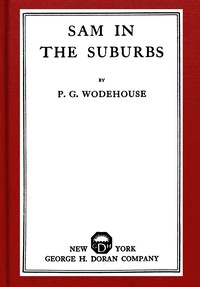
Sam in the Suburbs — Edition Insights
(0 User reviews)
32
Project Gutenberg
2022
Not confirmed
Humorous stories; England -- Fiction; Gangsters -- Fiction; Publishers and publishing -- Fiction
Readers of public-domain and historical texts
Project Gutenberg digital edition
en
Edition facts
Words
84,712
Reading time
369 min
Text sections
10
Sam in the Suburbs — Edition Insights can be approached with a clearer sense of reading commitment from its source measurements: 84,712 words, 6 hr 9 min estimated reading time, and 10 detected text sections.
The text analysis averages about 12.8 words per sentence, while the detected sections provide another way to judge how the source is divided.
Project Gutenberg metadata also associates the work with “Humorous stories,” connecting these edition facts with the source record’s subject description.
Source:
Project Gutenberg record #67368
P. G. Wodehouse's 1925 novel follows Sam Shotter, a young American in London's suburbs, entangled with gangsters, a publishing tycoon, and a dog named Amy. The excerpts showcase Wodehouse's characteristic comic voice through office high-kicking contests, suburban gardens, and canine misadventures.
Read the complete public-domain text at its original source.
Read on Project GutenbergThe opening chapter of Sam in the Suburbs does not begin in a leafy London lane but in a sweltering New York office building, where Sam Shotter referees an Office Boys’ High-Kicking Championship. This unexpected setting—complete with stenographers chewing gum and a willowy youth from the Consolidated Eyebrow Tweezer and Nail File Corporation—immediately signals Wodehouse’s comic method: elevating trivial contests to epic status while grounding them in mundane commercial names. The catalog subjects list “gangsters” and “publishers and publishing,” yet the excerpts reveal that the suburban setting (Valley Fields, Mon Repos) and a dog named Amy receive far more page-time than any criminal enterprise. Readers should expect the gangster element to be filtered through Wodehouse’s characteristic indirection—more threat than action.
The Suburban Landscape as Comic Stage
The excerpts devote considerable attention to the physical details of suburban life: the garden of Mon Repos, a wooden fence, a laurel bush, a kitten chasing its tail. Wodehouse uses these mundane elements to generate comedy through incongruous scale. The dog Amy’s exploration of the garden is described with mock-heroic language: she feels “like stout Balboa when with eagle eyes he stared at the Pacific,” and her leap over the fence lands “like the delivery of half a ton of coal.” The kitten’s panic is rendered as a high-stakes drama. This technique—applying epic simile to domestic animals—is a hallmark of the prose. The setting is not merely backdrop but an active source of humor, as when Hash Todhunter flings an egg at Amy from the kitchen window, and she “ate the remains lightheartedly.” The suburbs here are a place of petty conflicts and grandiloquent narration.
Voice and Dialogue: Understatement and Anticlimax
Wodehouse’s dialogue in the excerpts relies on clipped exchanges and deliberate anticlimax. When Kay declines Sam’s offer to lend her Todhunter, the conversation proceeds: “No, thanks.” / “Perhaps you’re wise. Apart from dry hash, he’s a rotten cook.” / “So is Claire.” / “Really? What a battle of giants it will be when they start cooking for each other!” The humor comes from the deadpan escalation of trivial complaints into epic competition. The narrative voice frequently undercuts characters’ emotions with bathetic observations: Sam sighs and goes to have a bath after a romantic disappointment. The dog Amy’s mourning is compared to Rachel’s, then undercut by her immediate cheerfulness. This pattern of elevated reference followed by deflation is consistent across the excerpts and suggests a novel where emotional stakes are always tempered by comic distance.
Gangsters and Publishers: What the Excerpts Reveal
The catalog subjects list “gangsters” and “publishers and publishing,” but the excerpts contain no explicit gangster activity and only one oblique reference to publishing: the title page lists other Wodehouse novels, and the contents include chapters like “Lord Tilbury Engages an Ally” (Tilbury being a publishing magnate in Wodehouse’s oeuvre). The gangster element appears to be represented by characters such as Soapy Molloy (chapter 23) and Hash Todhunter, who bought Amy from a pub. The excerpts show Hash as a cook and dog-owner, not a criminal. Readers should infer that the gangster plot is peripheral or handled with Wodehouse’s characteristic lightness—more about comic misunderstanding than violence. The suburban setting and animal antics dominate the available text, suggesting the novel’s center is domestic farce rather than crime fiction.
The excerpts from Sam in the Suburbs reveal a novel that uses its suburban setting as a laboratory for Wodehouse’s comic techniques: mock-heroic narration, deflationary dialogue, and the elevation of trivial events. Readers expecting a conventional gangster story will find instead a comedy of manners in which a dog’s leap over a fence receives the same rhetorical treatment as a business crisis. The incomplete excerpts leave the plot’s resolution unclear, but the consistent voice and structural patterns suggest a work more interested in the absurdities of daily life than in criminal intrigue. Approach this as a comedy of suburban misadventures, with gangsters as seasoning rather than main course.
There’s a certain comfort in watching Sam Shotter stumble through his suburban scrapes, that odd gentleness beneath the mayhem. It puts me in mind of another old friend, Dr. Paull's Theory: A Romance — Edition Insights, where the heart’s quiet logic outwits every grand plan. Both books share that tender, unspoken belief that our best intentions often lead us precisely where we belong.
There are no reviews for this eBook.
There are no comments for this eBook.
Reader reflection
Record your reading impressions
A brief reflection can help important ideas stay with you longer.
Your progress
0
/
10
2
Did this book hold your interest?
3
How likely are you to recommend this book?
4
Did the language feel accessible?
5
How would you describe its reading pace?
6
Was the book easy to understand?
7
How would you rate its originality?
8
How valuable was this book for your own interests?
9
Which lesson or insight stayed with you?
10