1

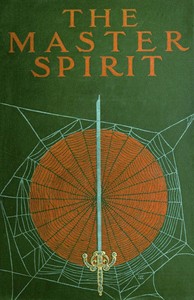
The Master Spirit — Context and Discussion
(0 User reviews)
314
Project Gutenberg
2022
Not confirmed
London (England) -- Fiction; Love stories; Adventure stories; Trials (Murder) -- Fiction; Lawyers -- Fiction; Countesses -- Fiction
Readers of public-domain and historical texts
Project Gutenberg digital edition
en
Edition facts
Words
90,340
Reading time
393 min
Text sections
39
For The Master Spirit — Context and Discussion, the stored edition analysis reports 90,340 words, 6 hr 33 min estimated reading time, and 39 detected text sections.
The text analysis averages about 16.9 words per sentence, while the detected sections provide another way to judge how the source is divided.
Project Gutenberg metadata also associates the work with “London (England) -- Fiction,” connecting these edition facts with the source record’s subject description.
Source:
Project Gutenberg record #67703
An editorial note on Sir William Magnay's 1906 novel, focusing on its layered narrative voice, shifts between public and private settings, and the tension between spoken dialogue and unspoken thought, as seen in excerpts from the trial and romance plotlines.
Read the complete public-domain text at its original source.
Read on Project GutenbergFrom its opening paragraph, The Master Spirit establishes a narrator who is both observant and sardonic. The description of Westminster as a 'great workshop' where politicians 'waste the nation’s time' sets a tone of detached irony that recurs throughout. This voice does not simply report events; it judges, undercuts, and occasionally sympathizes, creating a layered reading experience where the reader must gauge the reliability of both narrator and characters.
A Narrator Who Intervenes
The narrator frequently steps in to comment on characters’ motives or the absurdity of social rituals. In the opening chapter, the description of politicians as 'priests in that great Temple of the Tongue' is a pointed critique delivered with a flourish. Later, when Geoffrey Herriard reflects on his past, the narrator notes that 'like accusing spirits there now rose to his mind' the memories of his mentor’s vindictiveness. This is not a neutral report; it is a judgment framed in dramatic language. The narrator also uses free indirect discourse to blend Herriard’s thoughts with the narrative voice, as when Herriard thinks of Gastineau as 'a very Iago.' Such interventions create a sense of moral commentary that guides the reader without being overtly didactic.
Pacing Through Contrast: Public Spectacle and Private Turmoil
The novel alternates between crowded public scenes—a sensational trial, a society party, a riot—and intimate, tense dialogues. The trial, hinted at in the chapter 'The Vaux House Case,' is a set piece of legal drama, while the romance between Herriard and Alexia unfolds in quieter moments. The excerpt shows a shift from the noise of Westminster to a private conversation where Alexia’s 'grey eyes fixed on him with perhaps a suspicion of anxiety.' The contrast is sharp: the public scenes are filled with chatter and movement, the private ones with silence and unspoken fears. This oscillation keeps the narrative dynamic, as the reader moves from the energy of the courtroom to the psychological weight of a confession.
Silence and Subtext in Dialogue
Much of the emotional tension in The Master Spirit resides not in what is said but in what is left unsaid. When Alexia asks, 'Does your fate sadden you?' Herriard’s reply is evasive, and the narrator notes that 'her woman’s instinct was right; happily, he thought, there were limits to it.' The characters speak around their secrets, and the reader must infer the gaps. Herriard’s internal turmoil—his guilt about his past with Gastineau—is never fully articulated to Alexia, only hinted at. This technique creates a sense of dramatic irony: the reader knows more than the characters reveal to each other. The dialogue is polished but loaded, and the pauses are as telling as the words.
Readers should attend to the novel’s shifts in register: the narrator’s ironic asides, the clipped dialogue of the courtroom, and the lyrical passages of introspection. The story moves between genres—legal thriller, romance, social satire—and the voice adapts accordingly. Pay attention to who is speaking and who is silent; the gaps often hold the key.
I keep thinking about how that old novel holds its silences—the way Magnay lets what’s unsaid weigh more than any courtroom speech. The Master Spirit stayed with me like a quiet room after company leaves. Something in it reminded me of another, slower read: The Van Roon — Inside the Classic, where the same shadows between people linger, patiently, long after the last page.
There are no reviews for this eBook.
There are no comments for this eBook.
Reader reflection
What was your reading experience?
Capture what you thought, learned, and would like to remember.
Your progress
0
/
10
2
What was your overall reaction to the book?
3
Is this a title you would suggest to others?
4
How easy was the book to follow?
5
How clear did the writing feel?
6
Would you start a conversation about this book?
7
Which element worked best for you?
8
Would a second reading be valuable?
9
What is the main idea you are taking away?
10