1

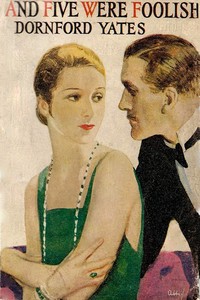
And Five Were Foolish — Inside the Classic
(0 User reviews)
313
Project Gutenberg
2021
Not confirmed
Man-woman relationships -- Fiction; Short stories, English; English fiction -- 20th century; Husband and wife -- Fiction
Readers of public-domain and historical texts
Project Gutenberg digital edition
en
Edition facts
Words
94,490
Reading time
411 min
Text sections
12
The source record for And Five Were Foolish — Inside the Classic measures this digital text at 94,490 words, 6 hr 51 min estimated reading time, and 12 detected text sections.
The text analysis averages about 10.7 words per sentence, while the detected sections provide another way to judge how the source is divided.
Project Gutenberg metadata also associates the work with “Man-woman relationships -- Fiction,” connecting these edition facts with the source record’s subject description.
Source:
Project Gutenberg record #65384
Twelve stories of romantic entanglement and marital strife, where characters negotiate inheritance, infidelity, and revenge across English country houses and continental roads.
Read the complete public-domain text at its original source.
Read on Project GutenbergThe collection opens with Sarah Vulliamy protesting that she wanted to marry George Fulke, while her companion Virgil Pardoner insists she must marry him due to a will. The dialogue crackles with brittle repartee: Sarah has had thirty-nine proposals, and Pardoner claims to be in love with someone else. This initial scene establishes a pattern of characters caught between desire and obligation, often expressed through witty, combative exchanges. The stories shift between drawing-room negotiations and more perilous settings, as when a narrator later vows to kill Berwick Perowne after a woman's death. Movement between domestic interiors and open roads—champagne lunches, mountain drives, hospital vigils—structures the volume, with recurring images of broken dreams and pieces kept sacred.
Dialogue as Duel
The excerpts reveal a consistent reliance on rapid, adversarial dialogue. Sarah and Pardoner trade barbs over champagne, with Pardoner groaning at her dismissal of fine wine as 'Filthy stuff.' The repartee is not mere decoration; it drives the plot forward, as when Pardoner warns Sarah not to 'play with fire' by pursuing George Fulke. Later, in the story of Jo, the narrator recalls her fighting Death 'like the Great Heart she always was,' and her final words are a sustained, lyrical speech about broken dreams. The contrast between the clipped, ironic exchanges of the opening and the emotional directness of Jo's deathbed scene shows the range of the author's dialogue, from social fencing to raw confession.
The Road and the Room
Settings alternate between enclosed spaces—restaurants, sickrooms—and open roads. The narrator pursuing Perowne describes driving 'like fury along the elegant road that swept and curled and thrust like some stately serpent up and up into bleak places.' This serpentine road mirrors the twisting deceptions of the plot: Perowne is lured by a false message, his chauffeur compromised over supper. The mountain road, 'but little travelled till April is old,' becomes a stage for vengeance. In contrast, Jo's death occurs in a room where nurses move 'like seconds plying their principal between the rounds,' a boxing metaphor that domesticates violence. The movement between these spaces—from the confined to the expansive—creates a rhythm of tension and release.
Broken Things and Sacred Pieces
Recurring imagery of fragmentation and preservation runs through the excerpts. Jo speaks of keeping 'the broken pieces as one keeps a sacred thing,' and insists that 'not a flinder missing' from the dream she broke. The narrator responds by claiming she has mended it, transforming fragments into a whole. This motif of breakage and repair appears earlier in Sarah's refusal to drink champagne—a rejection of something whole and valuable. The will that forces Sarah into marriage is itself a broken instrument of control. The author uses these images to explore how characters handle loss: some, like Sarah, resist; others, like Jo, attempt to restore what is shattered. The persistence of 'pieces' and 'bits' suggests a world where wholeness is fragile and often illusory.
Narrative Shifts and Unreliable Gaps
The excerpts show abrupt shifts in narrative voice and time. The opening story is third-person, focused on Sarah; later sections shift to a first-person narrator who vows to kill Perowne. This narrator provides precise dates—'March 11th, 1929'—and details of his surveillance, but withholds key information: 'What the job was I don’t know.' The gaps in knowledge create suspense, as when the narrator wires from Pampeluna and relies on a maid's message. The reader is left to infer the relationship between the red-haired woman and Perowne. These narrative ellipses mirror the characters' own blind spots: Sarah does not understand why she cannot marry George; the narrator does not fully grasp Perowne's power over Jo. The structure thus invites readers to piece together motives from incomplete evidence.
Readers should attend to the way each story reworks a limited set of situations—inheritance, infidelity, revenge—through different voices and settings. The author's preference for dialogue over description means that character is revealed through what is said and left unsaid. The recurring image of broken things, from champagne glasses to dreams, offers a thread that ties the twelve tales together without reducing their individual tensions. Approach the collection as a series of variations on a theme, where the pleasure lies in observing how the same patterns of desire and deception play out in new guises.
I kept thinking about those twelve stories — how quietly people betray the ones they love over money and pride. That ache stayed with me for days. There’s something in An Uncrowned King: A Romance of High Politics — Reading Notes that feels the same way, a softer kind of ambition bruising hearts. I closed it feeling oddly understood, like a secret shared between old friends.
There are no reviews for this eBook.
There are no comments for this eBook.
Reader reflection
How did this book work for you?
Your answers remain private and are stored only in this browser.
Your progress
0
/
10
2
Did this book hold your interest?
3
How likely are you to recommend this book?
4
What was the reading difficulty like?
5
Which element worked best for you?
6
Did any part of the book feel personally relevant?
7
Was the book moving at the right speed?
8
Did you gain anything practical from the text?
9
What changed or sharpened your thinking?
10