1

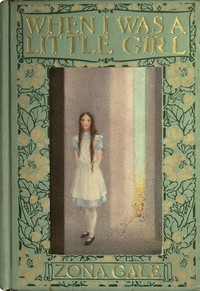
When I Was a Little Girl — Edition Insights
(0 User reviews)
1149
Project Gutenberg
2019
Not confirmed
Fairy tales; Girls -- Fiction; Children -- Fiction; Play -- Fiction
Readers of public-domain and historical texts
Project Gutenberg digital edition
en
Edition facts
Words
82,329
Reading time
358 min
Text sections
33
The source record for When I Was a Little Girl — Edition Insights measures this digital text at 82,329 words, 5 hr 58 min estimated reading time, and 33 detected text sections.
The text analysis averages about 17.5 words per sentence, while the detected sections provide another way to judge how the source is divided.
Project Gutenberg metadata also associates the work with “Fairy tales,” connecting these edition facts with the source record’s subject description.
Source:
Project Gutenberg record #60457
Zona Gale's 1913 collection of linked stories explores a girl's inner life through contrasts between mundane rules and vivid fantasy, using precise sensory details and a narrative voice that addresses a past self.
Read the complete public-domain text at its original source.
Read on Project GutenbergThe narrator of When I Was a Little Girl addresses her own childhood self directly: “You little child who never have died, in these stories I am trying to tell you that now I come near to understanding you.” This framing establishes a retrospective, intimate tone that runs through the book. The opening pages describe a little girl who “does not come here any more” yet stirs when certain sensory triggers occur—sunlight falling a certain way, graham griddle cakes baking, the town clock pointing “in its clearest you-will-be-late way.” These specific, homely details anchor the fantasy elements in a recognizable Midwestern childhood.
The Sealed Doors of Memory
The narrator repeatedly invokes “sealed doors” that separate the adult from the child self. The little girl is “somewhere beyond sealed doors,” and the stories attempt to open those doors through memory. This structural device gives the book a layered quality: the present-day narrator interprets past events while acknowledging that some experiences remain inaccessible. In one episode, two girls wonder what they were rescued from by a hayride, and the narrator notes, “What were we rescued from? We should never know.” The text thus balances recovered memory with acknowledged gaps, treating childhood as a foreign country whose customs can be partially reconstructed but never fully reclaimed.
Rebellion Against Dolls and Domestic Order
A striking pattern in the excerpts is the protagonist’s violent rejection of doll-play. After being excluded from a boys’ adventure, she seizes Irene Helena and “pounded her head against the trunk of the catalpa tree,” then hurls all eleven dolls into the grass and potato patch. Her friend Mary Elizabeth understands immediately, asking “Which one can I—which one can I?” The episode crystallizes a tension between the prescribed feminine world of tea parties and static dolls and the desire for real adventure. The narrator later puts on her best shoes (forbidden for everyday) and sneaks downtown, a small act of defiance that echoes the earlier doll destruction. These moments suggest that the book uses fantasy not as escape but as a critique of the limitations placed on girls.
The Password Never Spoken
Throughout the excerpts, a sense of missed or forbidden knowledge recurs. The boys have a password whispered into a manger, but Mary Elizabeth and the narrator “had it whispered for us”—they are told rather than initiated. Later they speculate endlessly about what the password was, and the narrator admits, “It was days before we gave over wondering. And sometimes in later years I have caught myself speculating on that lost word.” This motif of the unattainable secret parallels the sealed doors of memory. The book does not promise that all mysteries will be solved; instead, it treats the act of wondering as valuable in itself. The narrative voice remains curious but unsentimental, refusing to fabricate answers where the child’s experience provided none.
Readers should attend to the way Gale uses specific, almost tactile details—the smell of hay, the weight of a silver dollar in a handkerchief, the creak of a fence chain—to ground her fantasy episodes. The book’s structure, with chapters titled like nursery rhymes (“One for the Money,” “Two for the Show”), hints at a game-like logic that the stories both follow and subvert. The illustrations by Agnes Pelton, listed in the front matter, may offer additional visual cues to the book’s blend of realism and whimsy.
I've always found Zale Gale's little girl and Captain Wilkie to be quiet cousins, each locked in their own invented worlds against a stern, unyielding reality. Her rule-bound days and vivid fancies echo his careful justifications. They'd have understood each other, I think, across the years. One memory of that kinship lives in Recollections of Captain Wilkie: A Story of an Old Offender — Background and Themes, tucked safe on my shelf.
There are no reviews for this eBook.
There are no comments for this eBook.
Reader reflection
How did this book work for you?
Your answers remain private and are stored only in this browser.
Your progress
0
/
10
2
Did this book hold your interest?
3
Is this a title you would suggest to others?
4
How easy was the book to follow?
5
Was the book easy to understand?
6
Could you see yourself revisiting this book?
7
Did it raise ideas you would like to talk about?
8
What was its emotional impact?
9
In one sentence, what did you learn?
10