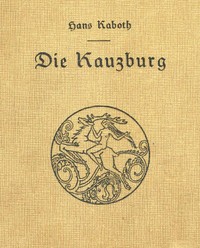
Die Kauzburg : Roman aus dem Tagebuch eines Freundes by Hans Kaboth

(4 User reviews)   374
By Donna Ferrari Posted on Jan 12, 2026
In Category - Personal Finance
Kaboth, Hans, 1866-1928 Kaboth, Hans, 1866-1928
German
Ever found an old diary and felt like you were trespassing on someone's private world? That's the exact feeling you get reading 'Die Kauzburg.' It's not really a novel—it's presented as a friend's diary, found and published after his death. The narrator is a man who becomes obsessed with a reclusive family living in a crumbling castle called the Kauzburg. He's drawn to their strange, closed-off world, but as he gets closer, he starts to uncover secrets that were probably better left buried. It's a slow-burn, atmospheric story about the danger of curiosity and the ghosts people carry with them. If you like quiet, psychological stories that feel real, this one will stick with you.
Share

Read "Die Kauzburg : Roman aus dem Tagebuch eines Freundes by Hans Kaboth" Online

This book is available in the public domain. Start reading the digital edition below.

START READING FULL BOOK
Instant Access    Mobile Friendly

Book Preview

A short preview of the book’s content is shown below to give you an idea of its style and themes.

Pierersche Hofbuchdruckerei Stephan Geibel & Co., Altenburg, Thür. ~Buchausstattung von Käte Vesper-Waentig~ [Illustration] Da bin ich nun in meiner neuen Heimat. Was sag’ ich: Heimat? .... In meiner neuen Fremde bin ich. Ein kleines Städtchen ist’s, an einem Fluß gelegen, hoch wie ein Storchennest. In meinem Forsthause sitze ich nun und schreibe. Zum erstenmal in dieses Tagebuch, seit ich hier bin. Es gab mit dem Einrichten so viel zu tun, daß ich nicht zum Schreiben kam. Dazu noch der neue Dienst — kurzum, es kam nicht dazu. Noch ist mir alles so neu, so seltsam, daß ich mich an der Nasenspitze zupfen und fragen möchte: ist’s ein Traum oder ist’s Wirklichkeit? Ist’s Wirklichkeit, daß mein Forsthaus ein altes ritterliches Ordenshaus, eine echte, aus dicken Steinmauern vor einigen hundert Jahren erbaute Burg ist, oder träume ich nur? Der Fluß rauscht tief unter den Mauern meiner ritterlichen Forstburg vorbei und läßt die Fische springen, ein Käuzlein ruft sein Huhu und streicht unhörbar wie ein Geist — vielleicht der Geist eines einstigen Ritters oder Mönchs — ums Mauerwerk meiner Burg. Täuscht mich nicht alles, so hör’ ich den Forstlehrling schnarchen in seinem Kämmerlein. Der Hahn hat soeben gekräht. Mein Haushahn ist’s, ein echter Italiener. Ein Hund hat gebellt. Der Nachtrat tutet die Mitternacht ein und schlürft die Straßen des Städtleins hinab. Ein Duften, ganz weich und linde, zieht in mein offenes Fenster; »’s ist Frühling«, ruft es mir zu, die roten Mauerrosen ranken am steinernen Tor, an der steinernen Mauer, die meinen Garten umschließt. O Waldkauz, ich fühle dir nach, warum du des Nachts die Mäuslein fängst und den Tag verschläfst! Es steckt Poesie in einer solchen Vollmondnacht! Poesie steckt auch in meiner Forstburg, und das versöhnt mich mit dem alten Gemäuer. Mit Waldkauzgefühlen, Waldkauzaugen betrachte ich den alten Kasten, betrachte ich die Mäuse, die ungeniert um meinen Schreibtisch tanzen. Es ist Vollmondnacht, und unten, tief unten rauscht der Fluß vorbei. Wenn seine Flut an die hohen Steinpfeiler der großen Brücke drängt, dann rauscht diese Flut zürnend auf, dann wirft sie silbernen Brodel und silbernes Geschäum, wie ein Roß, das in den Zügeln schäumt. Ich kann’s von hier oben sehn. Ich kann den Spiegel des Flusses sehn, kann sehn, wie er glänzt und gleißt unter den hellen, sanften Strahlen des Vollmonds, der dort hoch oben im Nachthimmel hängt und langsam weiterschwebt. Mit einem milden Lächeln. Er ist erhaben über das kleine Weh der kleinen Mutter Erde. Er weint nicht mit, wenn Mutter Erde weint, nicht mit, wenn ihre Kleinen weinen. Er lächelt ewig, ewig sein gleiches Lächeln. Manchmal mit vollem Gesicht, manchmal nur mit der linken oder rechten Backe. Auch das ist schon genug, um sich an ihm zu erfreuen. Um ihm heraufzurufen: sei gegrüßt, Freund Mond, du einsamer Kauz dort oben! Lächle herab auf dieses kleine Städtlein, lächle herab auf meine Forstburg hier. Du gehörst zu solcher alten Burg, zu solchem Garten mit tausendjährigen Bäumen, mit aufgetürmtem und verwestem Laube, zu solcher Steinmauer und solchem Steintor, in dessen Wölbung es hohl klingt, schreitet man hindurch. Wie ward mir zumute, als ich das erstemal durch diese Steinwölbung schritt. Kalt wehte es mich an aus all dem Steinwerk längst vergangener Zeit. Als sich der schwere eiserne Torflügel krachend hinter mir schloß, da schien’s mir, als brächen sich tausend dumpfe Stimmen im dröhnenden, dumpfen Widerhall. »Eingesargt, lebend begraben«, höhnten die Stimmen, »laß alles hinter dir, was du liebst und haßt«, tönte es aus der großen Halle des Hauses, »ich halte dich fest und gebe dich nicht mehr heraus«, hauchte mich kalt der Atem des toten Ritters an, der zwischen zwei Mauern dieses Hauses seit dreihundert...

This is a limited preview. Download the book to read the full content.

Die Kauzburg is a book that plays a clever trick on you from the start. It’s not just a story about a castle; it’s a story told through a found diary, which makes everything feel unsettlingly real.

The Story

The book’s narrator, a friend of the author, becomes fascinated by the von Kauz family. They live in isolation in their ancient, decaying castle. He befriends them, drawn by their intellectual but melancholic world. The central figure is the family’s last son, a deeply troubled and brilliant man. As the narrator visits over time, he pieces together a family history full of tragedy, unspoken grief, and a weight of the past that seems to physically haunt the old halls. The mystery isn't about a crime, but about the slow unraveling of why these people are the way they are, and whether some sadnesses are too deep to ever escape.

Why You Should Read It

This book is a masterclass in mood. You can almost smell the damp stone and hear the silence of the castle. Kaboth doesn’t rush anything. He lets the tension build from quiet conversations and loaded glances. It’s less about what happens, and more about the crushing atmosphere of a place and a family trapped by their own history. The narrator’s growing unease becomes your own. You start to question his motives, too—is he a compassionate friend, or just a spectator drawn to someone else’s pain?

Final Verdict

Perfect for readers who love classic Gothic atmosphere without the over-the-top melodrama. If you enjoy character studies where the setting is a character itself, or stories that explore the slow poison of inherited sadness, you’ll find this deeply compelling. It’s a quiet, thoughtful, and genuinely haunting book from a forgotten voice of German literature.


🔖 Open Access

Legal analysis indicates this work is in the public domain. You are welcome to share this with anyone.

Donna Nelson
3 months ago

I came across this while researching and the content flows smoothly from one chapter to the next. It exceeded all my expectations.

Michael Young
4 months ago

I picked this up late one night and the tone remains consistent and professional throughout. I have no regrets downloading this.

Edward Hall
4 months ago

After spending time with this material, the organization of topics is intuitive and reader-friendly. It exceeded all my expectations.

Mason Brown
4 months ago

I was genuinely impressed since the examples used throughout the text are practical and relevant. This made complex ideas feel approachable.
4
4 out of 5 (4 User reviews )

Add a Review

Your Rating *
There are no comments for this eBook.
You must log in to post a comment.
Log in

Related eBooks