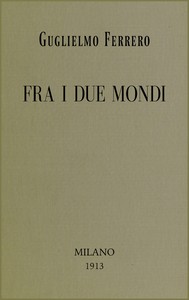
Fra i due mondi by Guglielmo Ferrero

(4 User reviews)   328
By Donna Ferrari Posted on Jan 12, 2026
In Category - Personal Finance
Ferrero, Guglielmo, 1871-1942 Ferrero, Guglielmo, 1871-1942
Italian
Hey, have you heard of this old Italian book, 'Fra i due mondi'? It's by Guglielmo Ferrero, a historian from the early 1900s. It's not your typical history book, though. The title means 'Between Two Worlds,' and that's exactly what it's about. It’s like a deep, personal look at what it feels like to be caught between two completely different eras—maybe the old world of tradition and the new world of modern ideas. I’m not sure if it's a novel or a philosophical essay, but it sounds like he's wrestling with the big question of how we find our place when everything around us is changing. It’s a forgotten piece from a fascinating time in European thought. Want to dive into something a bit different with me?
Share

Read "Fra i due mondi by Guglielmo Ferrero" Online

This book is available in the public domain. Start reading the digital edition below.

START READING FULL BOOK
Instant Access    Mobile Friendly

Book Preview

A short preview of the book’s content is shown below to give you an idea of its style and themes.

lettore potrebbe forse supporre, di Parigi o di Roma, ma di New-York. La sala da pranzo del «Cordova» aveva tre ordini di mense: una tavola lunga nel mezzo, a capo della quale sedeva il capitano; cinque tavole piccole a destra e cinque a sinistra, ciascuna capace di cinque persone. Alla tavola di mezzo, dove il comandante mi aveva assegnato il secondo posto alla sua sinistra — il primo era riserbato alla Gina, che era rimasta sul ponte — io mi ero, quella sera, ritrovato con parecchi amici del Brasile e dell’Argentina: a destra del capitano, al primo posto, l’ammiraglio José Maria Guimaraês, un vecchio asciutto e arzillo, sui sessantacinque anni, che il governo brasiliano mandava in Europa a comprar navi e cannoni; al terzo posto — il secondo era vuoto — un diplomatico e letterato pur esso brasiliano, il quale però portava un bel nome fiorentino di conio antico, molto diffuso nel Brasile, Cavalcanti: accanto a lui l’ingegnere Emilio Rosetti, e infine, dalla mia stessa parte, al quarto posto (il terzo era riservato al nostro figlio che allora già era a letto) l’avvocato Arnaldo Alverighi. Il Rosetti, che tornava da Buenos-Aires, era un mio vecchio e carissimo amico di Milano: l’Alverighi, l’avevo conosciuto a Rosario: il Guimaraês e il Cavalcanti a Rio. Avevo quindi presentato, dopo i primi convenevoli, il Rosetti e l’Alverighi, che venivano da Buenos-Aires, ai due brasiliani che si erano imbarcati con me, poche ore prima, a Rio: ovvia cortesia, ma il cui effetto fu che ben presto tutti e quattro — anzi tutti e cinque, il capitano compreso — mi furono addosso per farmi ricominciare a ritroso con i discorsi il lungo viaggio allora allora finito. Me lo aspettavo, del resto! Avevamo dunque ragionato un po’ del Brasile, dell’Uruguay, dell’Argentina; poi eravamo trapassati nell’altro emisfero; e tutti allora a interrogarmi ancora più curiosi. Avevo io vedute quelle favolose ricchezze del Settentrione? Quelle città smisurate? Quella indescrivibile vertigine di opere? Quei Titani, quei Semidei, quei Demoni del commercio, della banca, dell’industria? Sinchè eravamo venuti con il discorso alla metropoli americana che l’Alverighi, il Cavalcanti, l’ammiraglio e il Rosetti avevano tutti visitata. Ma qui presto una fierissima disputa si era accesa tra l’Alverighi che l’ammirava o gli altri tre che ne ridevano; avevamo discusso per un po’ in tumulto se New-York era una città bella o brutta; quando l’Alverighi, alla fine, aveva a un tratto, perentoriamente, quasi a sfida, proclamata New-York bellissima tra le città moderne! — Ci siamo! — pensai. — Chi sa quale indiavolata baruffa mi scatena ora, quel benedetto avvocato! Io solo quindi, che lo conoscevo, non mossi ciglio e non dubitai che dicesse sul serio: degli altri invece, il Rosetti si volse a me sorridendo: l’ammiraglio squadrò lo strano interlocutore come per leggergli sulla faccia se intendeva scherzare: il capitano, piegandosi verso di me, mormorò a mezza voce: «Non le pare un po’ troppo?»: ma incerti tutti se l’avvocato dicesse o no sul serio, nessuno rispose. L’Alverighi però non li lasciò a lungo nel dubbio. — Un europeo — egli disse, — non può capire New-York. New-York è l’intestino dell’America che digerisce le immondizie di tutta la terra, i rifiuti dell’universo: e di quelli fa un sangue purissimo, che nutre un continente.... Ed entrato in questo intestino per la bocca della metafora, chi sa per qual via ne sarebbe uscito, se le braccia nude, le spalle ravvolte in un velo celeste, i cui lembi le svolazzavano ai fianchi, sfolgorante in una sfarzosa veste azzurra di gala, come venisse a un pranzo di cerimonia, non fosse comparsa a questo punto sulla porta una signora. Il...

This is a limited preview. Download the book to read the full content.

Guglielmo Ferrero's 'Fra i due mondi' (Between Two Worlds) is a unique work from the early 20th century. It's not a straightforward story with a plot in the usual sense. Instead, think of it as a deep, reflective exploration. Ferrero, a historian and sociologist, uses this book to examine the human condition stuck in a moment of historical shift. He paints a picture of a person, or perhaps a whole society, standing at a crossroads.

The Story

There isn't a traditional narrative with characters A, B, and C. The 'story' is the intellectual and spiritual journey of navigating two conflicting realities. One world represents the past—its stability, customs, and certainties. The other is the emerging modern world—full of new ideas, science, and uncertainty, but also fragmentation. The book is the internal conflict of choosing a path, understanding the past, and facing an unknown future.

Why You Should Read It

This book is for when you're in a thoughtful mood. It’s surprisingly relevant. Haven't we all felt 'between two worlds' at some point? Maybe between generations, cultures, or old and new ways of thinking. Ferrero puts that universal feeling under a microscope. His prose is dense but passionate. You read it for the ideas, for that moment where he describes a feeling you've had but never quite articulated. It’s less about events and more about the atmosphere of change.

Final Verdict

This isn't a beach read. It’s perfect for readers who love history, philosophy, or early 20th-century European thought. If you enjoy writers who wrestle with big questions about society and progress, like a less narrative-driven H.G. Wells or a more accessible Oswald Spengler, you'll find Ferrero fascinating. It’s a slow, rewarding book for a quiet afternoon when you want to think deeply about the times we live in—then and now.


ℹ️ No Rights Reserved

This book is widely considered to be in the public domain. It is available for public use and education.

Karen Smith
1 month ago

Make no mistake, the formatting of this PDF is flawless and easy to read on any device. Don't hesitate to download this.

Joseph Lopez
4 months ago

I didn’t realize how engaging this would be until the tone remains consistent and professional throughout. An unexpectedly enjoyable experience.

Kenneth Campbell
5 months ago

Believe the hype, the content strikes a great balance between detail and readability. Well worth recommending.

Margaret Garcia
3 months ago

I was genuinely impressed since the clarity of the writing makes this accessible to a wide audience. An unexpectedly enjoyable experience.
4
4 out of 5 (4 User reviews )

Add a Review

Your Rating *
There are no comments for this eBook.
You must log in to post a comment.
Log in

Related eBooks