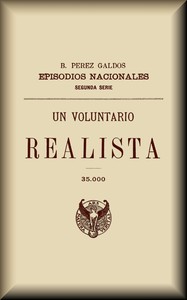
Un voluntario realista by Benito Pérez Galdós

(5 User reviews)   542
By Donna Ferrari Posted on Jan 12, 2026
In Category - Personal Finance
Pérez Galdós, Benito, 1843-1920 Pérez Galdós, Benito, 1843-1920
Spanish
Ever wonder what happens to the true believers when a revolution fails? 'Un voluntario realista' shows you. This isn't just a dusty history lesson. It’s the story of a man named Salvador Monsalud, caught between two worlds. He fought for the king, but now the liberal revolution is in power. His own family, die-hard royalists, see him as a traitor. The book follows his impossible struggle to find peace and a place to belong in a country tearing itself apart. If you like stories about loyalty, family drama, and the messy reality of political change, this one will pull you right in.
Share

Read "Un voluntario realista by Benito Pérez Galdós" Online

This book is available in the public domain. Start reading the digital edition below.

START READING FULL BOOK
Instant Access    Mobile Friendly

Book Preview

A short preview of the book’s content is shown below to give you an idea of its style and themes.

vecindario. Este se elevaba a la babilónica cifra de 2056 habitantes. Estos 2056 habitantes _setelsinos_ ocupaban, ¿a qué negarlo?, lugar muy excelso en el mundo industrial con sus ocho fábricas de navajas, tres de candiles y otras de menor importancia. También se dedicaban a criar mulas lechales que traían del cercano Pirineo; cultivaban con esmero las delicadas frutas catalanas, y eran maestros en cebar aves domésticas, así como en cazar la muchedumbre de codornices, palomas silvestres, ánades y becadas, que tanto abundan en aquellos espesos montes y placenteros ríos. No podían ser tales industrias de las menos lucrativas en tierra tan poblada de canónigos, racioneros y regulares. En 19 de septiembre de 1810, los franceses, que nada respetaban, entraron en Solsona con estrépito, y después de cometer mil desmanes se entretuvieron en quemar la catedral: con tal siniestro desplomáronse las torres y vinieron al suelo las campanas. También pusieron mano en los conventos, encariñándose demasiado con los de religiosas, donde cometieron desafueros que mejor están callados que referidos. El convento de monjas dominicas, llamado de San Salomó por ser fundación del marqués de este nombre (1573), padeció diversos tormentos, de los que no pocas memorias guardaron las espantadas vírgenes del Señor. Tan horribles excesos no eximían a las santas casas de sufrir expoliaciones y derribos, y San Salomó, que perdiera en aquel horrendo día tantos tesoros, se quedó también sin copón, sin candeleros y sin las arracadas de la Virgen. Desaparecieron cuadros y estatuas, y un trozo del ala de poniente fue derribado a cañonazos, quedando reducidas a escombros seis celdas del piso alto y el refectorio en planta baja. Era San Salomó un edificio de muy diversas partes compuesto, que semejaba una vieja capa de riquísima y descolorida tela, remendada con innobles trapos. Había allí algo del género ojival que domina en el Principado, restos de bóvedas románicas, puertas churriguerescas, trozos pertenecientes a la insulsa arquitectura del siglo pasado, paredes de ladrillo enyesado, tapia de adobes, muros hendidos, techos que se habían chafado cual sombrero; tragaluces bizcos, rodeados de una especie de marco palpebral de blanco yeso; rejas comidas de moho, tras de las cuales estaban las podridas celosías, por cuyos huecos solo cabía el dedo meñique de las monjas; vigas que servían de puntales; tapiales modernos que se empeñaban en cubrir huecos ocasionados por el desplome o abiertos por la bala de artillería; una torrecilla cuya espadaña solo tenía un esquilón; en suma, era un adalid valeroso combatido por los formidables enemigos que se llaman tiempo y guerra, pero que se defendía bien tapándose sus heridas y remendándose sus desgarrones como Dios le daba a entender, y desafiaba orgulloso lluvias y vientos, prometiéndose llegar con sus jorobas, infartos, bizmas y muletas a las más remotas edades venideras. Estaba San Salomó en un extremo de la ciudad y en el punto más desierto de ella, por donde partía el camino de Guardiola y Peracamps, que a corto trecho se trocaba en intransitable cuesta escarpada, cuyas ramificaciones se perdían en la montaña. La calle de los Codos, llamada así porque formaba dos ángulos en opuesto sentido quebrándose como un biombo, limitaba el convento por poniente. Dicha calle no era otra cosa que un hueco, foso o pasadizo entre San Salomó y el lienzo occidental de la muralla de la ciudad, y los codos que daban nombre a la tal vía eran ocasionados por los ángulos estratégicos de la fortificación. Al fin de la calle se veía un torreón, y un poco más allá la puerta del Travesat. Por oriente, con vuelta al mediodía, estaba la iglesia, en la calle de...

This is a limited preview. Download the book to read the full content.

Benito Pérez Galdós is a master of making history feel personal, and 'Un voluntario realista' is a great example. Set in the turbulent Spain of the 1820s, it drops you into the aftermath of a failed royalist uprising.

The Story

The novel follows Salvador Monsalud, a former soldier for the absolutist King Ferdinand VII. When the liberal government takes over, Salvador tries to leave that life behind and live quietly. But his past won't let him go. His own mother and brother are fierce royalists who despise him for what they see as his betrayal. He's hunted by old comrades who think he's a turncoat and mistrusted by the new authorities who can't forget who he once was. Salvador is a man with no home, desperately trying to navigate a world where every choice seems wrong.

Why You Should Read It

Galdós doesn't give us simple heroes and villains. He gives us people. The real tension isn't just in the political fights, but in the heartbreaking family dinners and bitter silences. You feel Salvador's loneliness and the impossible weight of his choices. The book asks tough questions: What do you owe your family? Your past? Your country? It's about the human cost of ideology, and that makes it feel surprisingly current.

Final Verdict

This is for anyone who loves character-driven historical fiction. If you enjoyed the personal struggles in Hilary Mantel's work or the societal portraits in Dickens, you'll find a kindred spirit in Galdós. It's perfect for readers who want more from history than just dates and battles—who want to understand the people who lived through it. A compelling, thoughtful read about a man stuck in the middle of his own life.

🔓 Copyright Free

This masterpiece is free from copyright limitations. Enjoy reading and sharing without restrictions.

Elijah Mitchell
2 weeks ago

I usually don’t leave feedback, but the author anticipates common questions and addresses them well. It is definitely a 5-star read from me.

Kevin Davis
4 months ago

From the very first page, the clarity of the writing makes this accesssible to a wide audience. This sets a high standard for similar books.

Nancy Wright
1 month ago

At first glance, the arguments are well-supported by credible references. An impressive piece of work.

Christopher Flores
4 months ago

This exceeded my expectations because the translation seems very fluid and captures the original nuance perfectly. Well wroth recommending.

William Jones
3 days ago

I approached this with an open mind and the author avoids unnecessary jargon, which is refreshing. Simpl brilliant.
4
4 out of 5 (5 User reviews )

Add a Review

Your Rating *
There are no comments for this eBook.
You must log in to post a comment.
Log in

Related eBooks