1

The Twin Mystery; Or, A Dashing Rescue — Edition Insights
(0 User reviews)
2214
Project Gutenberg
2021
Not confirmed
Detective and mystery stories; Murder -- Investigation -- Fiction; Extortion -- Fiction; Dime novels
Readers of public-domain and historical texts
Project Gutenberg digital edition
en
Edition facts
Words
54,955
Reading time
239 min
Text sections
8
The Twin Mystery; Or, A Dashing Rescue — Edition Insights can be approached with a clearer sense of reading commitment from its source measurements: 54,955 words, 3 hr 59 min estimated reading time, and 8 detected text sections.
The text analysis averages about 13.4 words per sentence, while the detected sections provide another way to judge how the source is divided.
Project Gutenberg metadata also associates the work with “Detective and mystery stories,” connecting these edition facts with the source record’s subject description.
Source:
Project Gutenberg record #65783
In this 1903 dime novel, Nick Carter and his team investigate a murder linked to a mysterious figure called the Brown Robin. The excerpts show a focus on witness testimony and physical description, with the detective analyzing handwriting and questioning stable hands.
Read the complete public-domain text at its original source.
Read on Project GutenbergThe opening chapter of The Twin Mystery; or, A Dashing Rescue introduces a letter from a self-styled “Brown Robin” who taunts Nick Carter with a challenge. The detective’s immediate analysis—examining handwriting, noting the assumed hand, and debating the writer’s gender with his wife Edith—establishes a methodical, evidence-based approach. This early scene, set at the breakfast table, grounds the mystery in domestic routine before the action shifts to a murder investigation involving a coach, a dressmaker’s shop, and a witness who saw a man in the victim’s carriage.
Handwriting and Gender Ambiguity
The Brown Robin’s letter prompts a detailed discussion between Nick and Edith about the writer’s identity. Nick observes that the writing “might be taken for the writing of a woman a little more masculine than is usual, or of a man a little more feminine than is usual.” He concludes it is “an assumed hand, not the natural one of the person who wrote it.” This attention to graphology, rather than relying on intuition, reflects the detective’s systematic reasoning. Edith’s initial certainty that the writer is a woman wavers after a second look, underscoring the ambiguity. The exchange shows how the novel uses small, observable details—penmanship, phrasing—to build suspense around an unseen antagonist.
Witness Testimony and the Coach Murder
Later, Nick and his assistant Chick interview a stableman named Johnny Moran, who claims he saw a man in the victim’s coach. Moran’s description is vague: the man was “a swell” with a “shiny hat” and “whiskers all around his face.” He cannot swear to recognition unless the man wore the same clothes. However, he notes a distinctive physical habit: “a trick of hitching up his right shoulder,” more like “a kind of a jerk.” This detail, offered hesitantly, becomes a key clue. The scene emphasizes the fallibility of eyewitness accounts—Moran admits he “wasn’t stagging him off for anything”—yet the detectives treat his information as “very important.” The excerpt shows how the narrative balances uncertainty with procedural follow-up, as Nick secures Moran’s availability for future identification.
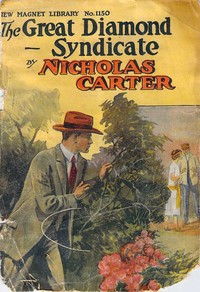
Serial Format and Chapter Structure
The novel was originally published as part of Street & Smith’s Magnet Library, a weekly series devoted to detective literature. The table of contents lists twenty-one chapters with titles like “The Brown Robin,” “A Blind Chase,” and “The Trap.” The chapter “A Dashing Rescue” appears near the end, suggesting the rescue promised in the title is a climactic set piece. The serial format encourages cliffhangers and rapid scene changes; the excerpt from Chapter I ends with Nick’s confident remark, “luck’s with us,” while the witness interview in a later chapter concludes with a similar note of optimism. This pacing, typical of dime novels, prioritizes forward momentum over deep characterization. Readers familiar with the Nick Carter series would expect recurring allies—Ida, Chick, Patsy—mentioned in the Brown Robin’s letter, though their roles in this installment are not fully revealed in the provided excerpts.
Readers approaching The Twin Mystery should attend to how the narrative constructs its puzzle through layered testimony and physical traces rather than psychological depth. The Brown Robin’s letter, the coachman’s account, and Moran’s observation each contribute partial views of the crime. The novel rewards attention to small inconsistencies—a shoulder hitch, a disputed presence in the carriage—that the detectives piece together. As a period dime novel, it offers a fast-paced, clue-driven mystery typical of the Nick Carter franchise, with the promise of a rescue that may hinge on these accumulated details.
Reading about Nick Carter lingering over a stable hand’s words made me recall my grandfather’s story about a riverboat ghost. He swore the handwriting on an old letter was proof. That quiet certainty returned while I turned pages of The Wolf Queen; or, The Giant Hermit of the Scioto — Key Ideas to Explore, where a similar hush falls before the truth appears.
There are no reviews for this eBook.
There are no comments for this eBook.
Reader reflection
What did you think of this book?
Answer a few questions and save a private reflection on this device.
Your progress
0
/
10
2
What was your overall reaction to the book?
3
Would you encourage someone else to read it?
4
How much effort did this book require?
5
Would you like to discuss this book with someone?
6
Is this a title worth rereading?
7
Did the story or argument move comfortably?
8
Did this book create an emotional response?
9
What is the main idea you are taking away?
10