1

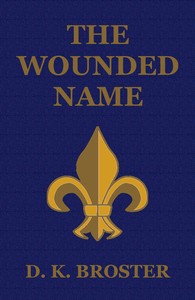
The Wounded Name — Reading Companion
(0 User reviews)
1613
Project Gutenberg
2021
Not confirmed
Historical fiction; Male friendship -- Fiction; Adventure stories; France -- History -- Consulate and First Empire, 1799-1815 -- Fiction
Readers of public-domain and historical texts
Project Gutenberg digital edition
en
Edition facts
Words
153,669
Reading time
669 min
Text sections
21
This digital edition of The Wounded Name — Reading Companion is described by source-level measurements including 153,669 words, 11 hr 9 min estimated reading time, and 21 detected text sections.
The text analysis averages about 14.9 words per sentence, while the detected sections provide another way to judge how the source is divided.
Project Gutenberg metadata also associates the work with “Historical fiction,” connecting these edition facts with the source record’s subject description.
Source:
Project Gutenberg record #66166
Set in 1814 France, this historical novel follows Aymar de la Rocheterie, a young nobleman leading Chouan guerrillas, whose reputation is shattered by a suspected betrayal. The excerpts reveal a tense drama of loyalty, suspicion, and a wounded name, with a focus on male friendship and the psychological cost of war.
Read the complete public-domain text at its original source.
Read on Project GutenbergThe opening chapter of The Wounded Name places the reader in an English-style room in April 1814, where a lady writes at a rosewood escritoire. The domestic calm is undercut by the calendar heading '1814' and the French name she signs, hinting at cross-Channel tensions. Her son, Aymar, enters planning to fish, but the conversation quickly turns to anniversaries and family obligations—a quiet prelude to the violent world he inhabits.
The catalog lists 'Male friendship' and 'Adventure stories' as subjects, and the excerpts bear this out: the narrative revolves around Aymar's bond with his second-in-command, de Fresne, and the suspicion that threatens it. Yet the adventure is less about action than about the corrosive effects of rumor and the weight of a compromised honor.
The Weight of a Name
The title, drawn from Hamlet, signals the novel's central concern: reputation and its fragility. Aymar de la Rocheterie is a vicomte leading Chouan guerrillas, but the excerpts show him less as a swashbuckling hero than as a man haunted by a perceived betrayal. When de Fresne confronts him with the accusation that Aymar deliberately sent a letter to the enemy, Aymar refuses to lie: 'I would rather not lie to you, de Fresne.' The scene pivots on a handshake refused—a gesture that crystallizes the rupture between friends.
The catalog subject 'Male friendship' is thus not a backdrop but the engine of the plot. The excerpts do not reveal whether Aymar is guilty, but they make clear that the suspicion of treachery is enough to poison his command. The wounded name of the title is not merely a literary allusion; it is a tangible burden that Aymar carries through every interaction.
Guerrilla Warfare and Its Discontents
Though cataloged as 'Historical fiction' set during the Consulate and First Empire, the excerpts focus less on grand Napoleonic campaigns than on the messy, intimate violence of partisan conflict. Aymar leads a band of Chouans—royalist irregulars—and the excerpts show him grappling with discipline, morale, and the paranoia of his men. Magloire Le Bihan, a subordinate, openly accuses him of treachery over a failed ambush, and Aymar must navigate both the external enemy and the internal threat of mutiny.
The setting is not the battlefield but a hut where Aymar tries to 'work out a map from memory' after losing his effects. The war is present through its absences: lost supplies, sleepless nights, and the constant need to justify his decisions. The catalog's 'Adventure stories' label is misleading if it promises derring-do; the excerpts depict a grim, psychological struggle where the greatest danger is the loss of trust among one's own men.
The Epigraphs as a Lens
The novel opens with two epigraphs: one from Hamlet ('O good Horatio, what a wounded name...') and one from Herbert Trench's poem about friendship. These are not mere decoration; they frame the narrative's dual preoccupations. The Shakespearean quote directly names the 'wounded name' of the title, while Trench's lines—'Thou shalt know who held thee dear, / Whose hand was thine in earnest'—prefigure the test of loyalty that Aymar and de Fresne undergo.
The excerpts also include a third epigraph from Kipling's Puck of Pook's Hill: 'Your fate will turn on the first true friend you make.' This is placed at the start of Chapter I, suggesting that the novel will explore how friendship shapes destiny. The catalog subjects do not mention these literary references, but they are essential to understanding the novel's thematic architecture. Readers should attend to how these epigraphs echo in the scenes of accusation and reconciliation.
The Wounded Name rewards attention to its small, telling details: the quill tracing a calendar, the bandage on de Fresne's head, the refusal of a handshake. The excerpts offer only fragments of a 153,000-word novel, but they suggest a story less about military adventure than about the moral ambiguities of loyalty and the slow work of repairing a shattered reputation. Readers should approach it as a psychological drama set against the backdrop of a forgotten war, where the most dangerous battles are fought within.
This book’s quiet devastation—a name fraying under suspicion—reminded me of waiting for a letter that never came, the way trust hollows out. Years later, Samantha in Europe — A Reader’s Guide gave me that same ache, though sunlit. There, too, something precious felt misread, and I sat with the feeling, turning pages like re-reading old postmarks.
There are no reviews for this eBook.
There are no comments for this eBook.
Reader reflection
Take a moment to reflect on this book
Create a short personal record of your experience with this book.
Your progress
0
/
10
2
How much did you enjoy the reading experience?
3
Is this a title you would suggest to others?
4
How demanding did the text feel?
5
How would you describe its reading pace?
6
Did the book give you something worth debating?
7
How understandable was the text?
8
What was its emotional impact?
9
What is the main idea you are taking away?
10