1

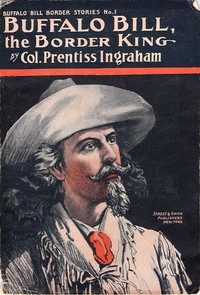
Buffalo Bill, the Border King; Or, Redskin and Cowboy — Themes and Context
(0 User reviews)
1489
Project Gutenberg
2020
Not confirmed
Indians of North America -- Fiction; Dime novels; Buffalo Bill, 1846-1917 -- Fiction; Scouts (Reconnaissance) -- Fiction
Readers of public-domain and historical texts
Project Gutenberg digital edition
en
Edition facts
Words
91,714
Reading time
399 min
Text sections
58
The source record for Buffalo Bill, the Border King; Or, Redskin and Cowboy — Themes and Context measures this digital text at 91,714 words, 6 hr 39 min estimated reading time, and 58 detected text sections.
The text analysis averages about 14.8 words per sentence, while the detected sections provide another way to judge how the source is divided.
Project Gutenberg metadata also associates the work with “Indians of North America -- Fiction,” connecting these edition facts with the source record’s subject description.
Source:
Project Gutenberg record #62638
In this 1907 dime novel, Buffalo Bill and Texas Jack face a forest fire, a madman on an island, and a telltale crow. The excerpt shows Cody stripped to bare skin, swimming under fire, while the narrative balances grim survival with Texas Jack's gallows humor. The chapter titles promise a cascade of chases, captures, and rescues.
Read the complete public-domain text at its original source.
Read on Project GutenbergThe opening chapter, “Running the Death-gantlet,” sets a pattern of immediate physical peril that the novel sustains through its forty-nine chapters. In the excerpt, Buffalo Bill and Texas Jack find themselves trapped between a forest fire and a rifleman on an island. Cody strips, swims, and plans to outflank the shooter while Jack serves as a decoy behind a driftwood raft. The scene is notable for its tactile details—blazing embers hissing in the water, a crow that squawks “like a hen with its head caught between two fence-palings”—and for the way it balances mortal danger with Texas Jack’s reflexive joking: “I think I’d rather take cold lead than hot flames.”
Bare Skin and Bullets
The excerpt repeatedly strips its heroes of clothing and dignity. Cody and Jack “stripped swiftly” before entering the water, and Cody later finds “traveling through the brush in his bare skin was not pleasant at best.” The madman’s bullets force them to improvise: Jack pushes a raft while submerged, Cody swims underwater. The narrative dwells on physical vulnerability—bare bodies, cold water, heat from the rear—rather than on heroic posturing. Even the crow is unsettled by the sight of a “strange maritime animal, who walked erect like a man, but wore no clothes.” This emphasis on exposure and discomfort gives the adventure a gritty, almost absurdist texture.
The Madman’s Island and the Telltale Crow
The island is not a refuge but a trap. The madman who holds it is unnamed in the excerpt, referred to only as “that devil” and “the madman.” His presence turns the island into a kill box: Cody and Jack are caught “between two fires.” The crow that gives away Cody’s approach is a small but effective plot device—a natural detail that thwarts the scout’s stealth. The bird’s “raucous cry” and its comparison to a hen with its head caught add a touch of the grotesque. The scene suggests that in this world, even animals can become antagonists, and no plan survives contact with the environment.
A Pattern of Pursuit and Improvisation
The chapter titles in the table of contents reveal a relentless rhythm: “Running the Death-gantlet,” “The Desperate Venture,” “The Race With Death,” “Chased by the Flames.” The excerpt fits this pattern, with Cody and Jack constantly reacting to threats—fire, bullets, a crow—and devising makeshift solutions. Cody’s plan to “sneak over and get to the madman’s rear” is typical: he relies on cunning and physical endurance rather than superior firepower. The dialogue is clipped and functional (“How else, man?”), and the prose favors action over introspection. This is a world where problems are solved by moving, swimming, or shooting, and where the next chapter will bring another crisis.
Voice and Vernacular
The narrator’s voice is colloquial and slightly wry. Texas Jack’s quip about being “bound to joke under any and all circumstances” is a rare moment of self-awareness. The prose uses exclamations (“Holy Christmas!”) and onomatopoeia (“Ping!”, “plunked”) to heighten immediacy. Descriptions are concrete: “blazing embers showered about him, hissing and smoking as they struck the water.” The crow’s squawk is likened to a hen with its head caught, a homely simile that grounds the fantastic situation in farmyard reality. This vernacular style, mixing dime-novel melodrama with plainspoken observation, gives the narrative a distinctive, unpretentious energy.
The excerpt offers a concentrated sample of the novel’s method: place its heroes in a tight spot, strip away their advantages, and watch them think their way out. Readers who enjoy scenes of improvised survival, dry humor under fire, and a setting where the natural world is as dangerous as any human foe will find this episode representative. The crow, the raft, the madman’s rifle—each element is functional, not decorative. Approach the book expecting a series of such set pieces rather than a sustained plot.
I remember sitting on a porch at dusk, the smell of smoke from a far-off burn, thinking how survival often strips us to something honest. That dime novel’s raw Cody felt like that. Years later, Williwaw: A Novel — Edition Insights brought back that same quiet chill—not the fire, but the lone wind waiting. Some stories just hold that weather.
There are no reviews for this eBook.
There are no comments for this eBook.
Reader reflection
Record your reading impressions
A brief reflection can help important ideas stay with you longer.
Your progress
0
/
10
2
What was your overall reaction to the book?
3
Is this a title you would suggest to others?
4
How easy was the book to follow?
5
How personally connected did you feel to the book?
6
How useful did the reading feel?
7
Did anything about the book feel genuinely new?
8
Was the book moving at the right speed?
9
What changed or sharpened your thinking?
10