1

The Wolf Queen; or, The Giant Hermit of the Scioto — Key Ideas to Explore
(0 User reviews)
846
Project Gutenberg
2021
Not confirmed
Indians of North America -- Fiction; Adventure stories; Frontier and pioneer life -- Fiction; Dime novels
Readers of public-domain and historical texts
Project Gutenberg digital edition
en
Edition facts
Words
34,355
Reading time
150 min
Text sections
25
For The Wolf Queen; or, The Giant Hermit of the Scioto — Key Ideas to Explore, the stored edition analysis reports 34,355 words, 2 hr 30 min estimated reading time, and 25 detected text sections.
The text analysis averages about 16.5 words per sentence, while the detected sections provide another way to judge how the source is divided.
Project Gutenberg metadata also associates the work with “Indians of North America -- Fiction,” connecting these edition facts with the source record’s subject description.
Source:
Project Gutenberg record #65667
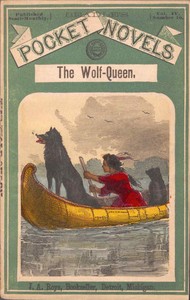
An editorial note on how the opening river combat, the cave hermit's introduction, and the wolf queen's recognition scene shape a first reading of this 1872 dime novel set on the Scioto River in 1804.
Read the complete public-domain text at its original source.
Read on Project GutenbergThe novel opens with a solitary canoe descending the swollen Scioto at sunset in 1804. The young protagonist, clad in buckskin but with a beardless, womanish face, is immediately marked as a novice in backwoods life. His internal monologue reveals a rash resolve to rescue Eudora from Jim Girty, defying the warning of Simon Kenton—a real historical figure—about the Wolf-Queen. This opening establishes a pattern of tension between youthful impulsiveness and experienced counsel, while the river setting and cliff imagery hint at the perilous landscape ahead.
The River Combat and Its Aftermath
Chapter I, titled “The River Combat,” promises action, yet the combat itself is not depicted in the excerpt; instead, the chapter focuses on the protagonist’s solitary journey and his spoken defiance. The absence of the promised fight may signal that the novel’s chapter headings are sensational hooks rather than literal summaries. The protagonist’s name is not given in the opening paragraphs—he is simply “the youth” until later identified as Mayne Fairfax. This delayed naming keeps the reader focused on his actions and the looming threat of the Wolf-Queen, whose title is first uttered as a sneer by Kenton.
The Cave Hermit and the Wolf Queen’s Domain
By Chapter II, the setting shifts to the hermit’s cave, introducing a second male authority figure. The hermit’s role is ambiguous: he tends to Fairfax’s wounds but also seems complicit in the queen’s domain. The wolf queen, Alaska, is portrayed as both caretaker and captor—she brings venison and gruel, yet her wolves menace the hunter. Her madness is signaled by erratic speech and memory lapses, as when she recalls a lost child with “three little moles upon the shoulder.” This recognition scene, occurring in the middle of the novel, pivots the plot toward questions of identity and kinship, though Fairfax privately dismisses the connection.
The Moles and the King of the Wolves
The moles on Fairfax’s shoulder become a central device, linking him to Alaska’s past. Alaska’s cry “Alaska had a little boy once” and her declaration that he “shall be King of the Wolves” introduce a supernatural or symbolic dimension. Tecumseh, the Shawnee chief, appears briefly, muttering that his father spoke of this event “many snows ago.” The excerpt does not confirm whether Fairfax is truly Alaska’s son; he resolves to play along for survival. This ambiguity—whether the moles are coincidence or fate—drives the middle chapters, as Fairfax navigates between his own memories of Fairfax manor and the queen’s delusions.
Narrative Structure and Chapter Breaks
The novel’s 21 chapters, each with a dramatic title like “The Mysterious Death-Shots” or “Squaw Vengeance, and Squaw Rage,” suggest a serialized, episodic structure typical of dime novels. The excerpts show that chapters often end on a cliffhanger—Alaska darting from the lodge, Tecumseh flying to her aid—while the next chapter may shift focus. Readers should expect rapid scene changes and multiple plot threads: the rescue of Eudora, the hermit’s backstory, and the wolf queen’s schemes. The historical figures Simon Kenton and Jim Girty (a notorious renegade) ground the fiction in frontier lore, but their actions are shaped by the demands of adventure fiction rather than historical accuracy.
First-time readers should pay attention to how the novel balances its sensational elements—wolf packs, mad queens, and hidden identities—with the practical details of frontier survival, such as paddling a canoe, dressing wounds with herbs, and navigating swollen rivers. The chapter titles offer a roadmap but may mislead; the real suspense lies in the slow revelation of Fairfax’s past and Alaska’s fractured memories. Approach the story as a series of set pieces rather than a tightly plotted novel, and note how the author uses historical names to lend credibility to a fundamentally melodramatic tale.
That opening river fight always stayed with me, the way the wolf queen’s recognition arrives so quietly after all that noise—like finding your own name carved on a stranger’s tree. It reminds me of the softer ache in Honor of Thieves: A Novel — Edition Insights, where stolen loyalties surface unexpectedly. Some books just leave that hush behind, don’t they?
There are no reviews for this eBook.
There are no comments for this eBook.
Reader reflection
How will you remember this book?
Save your reaction, strongest insight, and memorable passage.
Your progress
0
/
10
2
Was reading this book enjoyable?
3
Would you pass this book on to a friend?
4
How easy was the book to follow?
5
How clear did the writing feel?
6
How well did it match your expectations?
7
What was the strongest part of the book?
8
How strongly did the book affect you emotionally?
9
What did this book teach you most?
10